What counts as a Cavalier mix
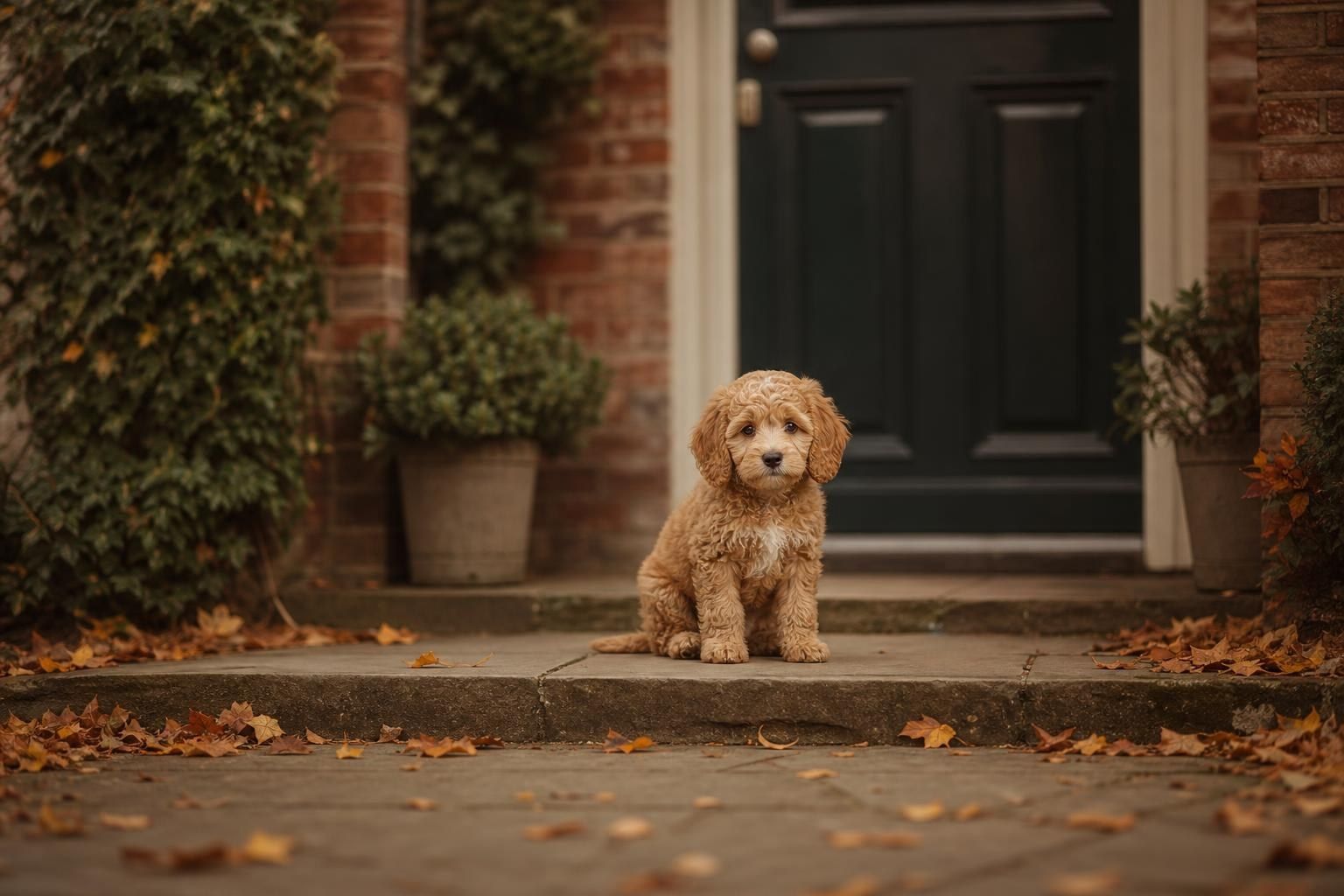
A Cavalier mix is a puppy with one Cavalier King Charles Spaniel parent and one parent of another breed. The two names you will see most often in Canada are the Cavapoo, crossed with a Poodle, and the Cavachon, crossed with a Bichon Frise. Others exist, usually named by joining two breed names together.
The key word is cross. A recognized breed has a written standard, a parent club and a stud book, so a breeder can show you generations of registered ancestors. A first-generation cross has two registered parents at best and no standard describing the result. Size, coat and temperament can vary widely within a single litter.
That is not a reason to avoid one. It is a reason to ask more questions, because the safeguards that come with a purebred puppy do not come automatically with a cross.
The Cavapoo, or Cavoodle
The Cavapoo, called the Cavoodle in Australia, is a Cavalier crossed with a Poodle. Its origin is disputed; Australia in the 1990s is often cited, but no single source settles it. It is not recognized as a breed by any major kennel club.
Buyers usually come to the Cavapoo for two reasons: the Cavalier's gentle temperament, and the hope of a lower-shedding coat from the Poodle side. The first is a fair expectation when both parents have good temperaments. The second is a gamble, because a puppy can inherit a coat anywhere between the two parents.
Coat type also changes the grooming. A curly or wavy Cavapoo coat usually needs regular clipping, quite unlike the untrimmed silky coat described on the Cavalier grooming page. Budget for regular professional grooming if the coat comes out curly.
Size depends on the Poodle parent and is hard to predict with confidence. Ask to meet both parents, or at least see them on video, and ask about earlier litters from the same pairing.
The Cavachon
The Cavachon is a Cavalier crossed with a Bichon Frise. It is often said to have been first bred in North America in 1996, though that claim rests on thin sources. Like the Cavapoo, it is a cross and not a recognized breed.
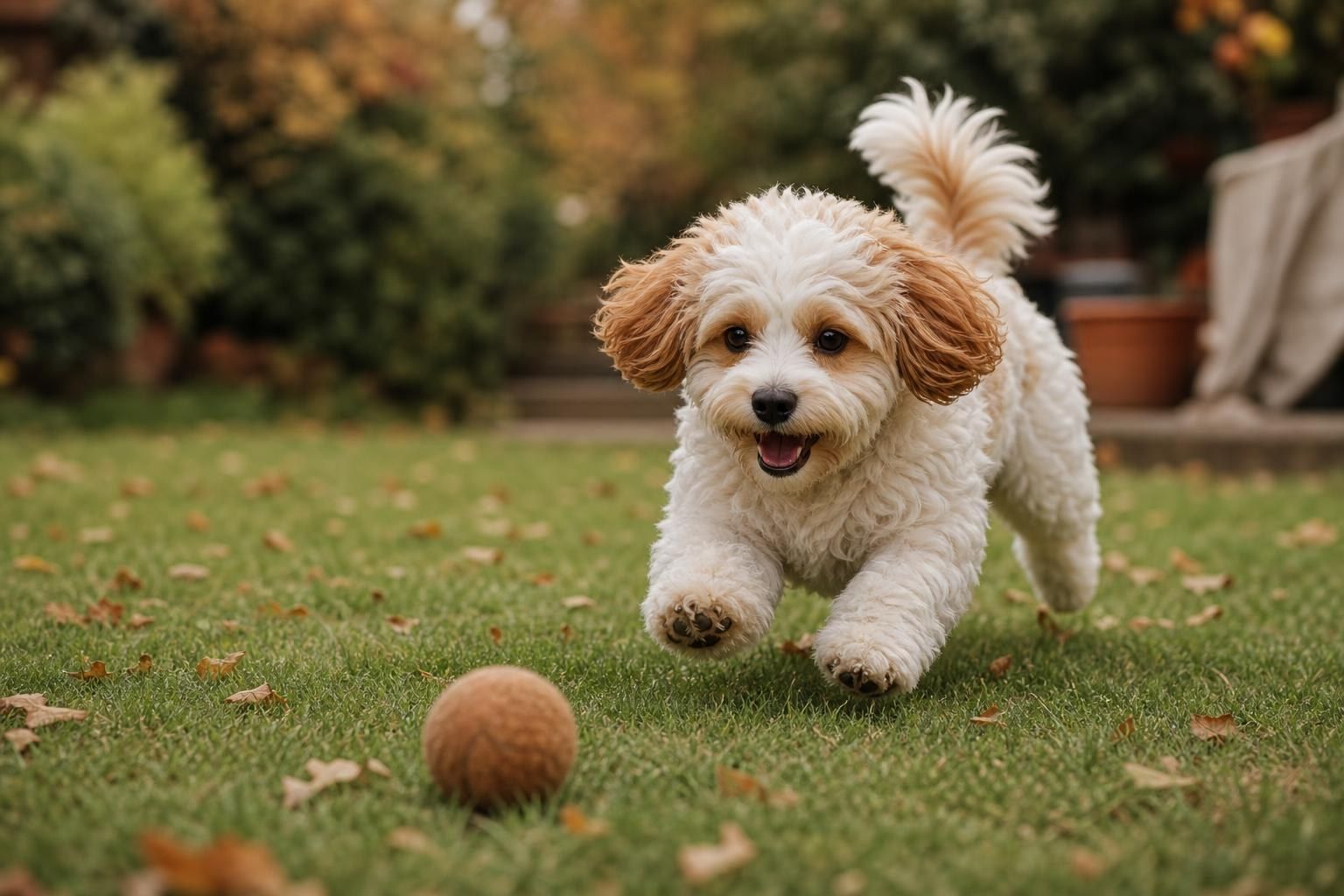
Cavachons tend to be small, cheerful and fluffy, with coats that range from soft and wavy to the tighter texture of the Bichon parent.
Because the Bichon coat grows continuously, many Cavachons need clipping or regular trimming. As with the Cavapoo, a puppy's adult coat cannot be promised at eight weeks.
Temperament reports from owners are usually warm, and both parent breeds are companion dogs. Still, a puppy's temperament comes from its parents and its early life, so meeting the mother remains the best evidence you can get.
The hypoallergenic question
Many Cavapoos and Cavachons are sold as hypoallergenic. No dog truly is. Allergy triggers are not limited to loose hair, so even a dog that sheds very little can still set off symptoms in a sensitive person.
A lower-shedding coat may leave less hair around the house, and some people with mild allergies cope better with one. That is a long way from a guarantee, and a cross cannot reliably promise even the coat type.
If anyone in the household has allergies, spend real time with adult dogs of the cross before committing, ideally indoors and more than once. Giving up a dog at six months because of allergies is hard on everyone, the dog most of all.
Any seller who promises an allergy-free puppy is telling you something about the seller, not about the dog.
Ask for the wording in writing
If a seller says a puppy is hypoallergenic, ask what happens if an allergy appears. A careful breeder will talk about rehoming terms rather than promises.
Health: both parents still need testing
Crossing two breeds does not cancel out the health problems of either. A puppy can inherit risks from both sides, and the Cavalier side carries some heavy ones. Mitral valve disease is extremely common in Cavaliers, with murmurs in more than half by age 5 according to figures gathered by Cavalier Health. A University of Guelph study running since 1992 has found no DNA marker for it, so screening by a cardiologist is still the only check.
That means the Cavalier parent of a Cavapoo or Cavachon should have the same clearances as one used in a purebred litter: a heart exam by a cardiologist with echocardiography, eye exams and the available DNA tests. The health testing guide lists them and explains when each is done.
The other parent should be tested too, according to the recommendations of its own breed club. Ask what those tests were and ask to see the results. A breeder who shrugs and says crosses are healthier by nature has not answered the question.
The honest view of this guide: a well-bred cross from two screened parents is a reasonable choice, and a cheap cross from untested parents carries every Cavalier risk with fewer safeguards.
Papers, registration and the Canine Companion Number
The Canadian Kennel Club does not register crosses as breeds. A Cavapoo or Cavachon cannot have CKC breed papers, whatever an advertisement says, and any "registry" papers that come with one are from a private organization, not the CKC.
What the CKC does offer is a Canine Companion Number, or CCN. Since 2014 it has allowed mixed and unrecognized breeds to compete in some CKC performance events, including agility, obedience and rally. Mixed-breed dogs must be spayed or neutered to receive one.
That makes a CCN a nice option for an owner who wants to train and compete. It does not say anything about the dog's health or parentage. For proof of the Cavalier parent's background, ask to see that parent's own CKC registration certificate.
Price, rehoming and the safety net
Reliable Canadian price figures for Cavapoos and Cavachons were not found in the sources behind this guide. What can be said is that a cross from health-tested parents costs the breeder the same testing and care as a purebred litter, so it should not be dramatically cheaper. A low price often means the testing was skipped. For purebred Cavaliers, the cost page has current ranges, roughly $2,000–$4,000 from a reputable breeder.
The safety net is thinner too. Breed clubs and their rescue programs are built around purebreds. The CKCS Club of BC, for example, states that its rehoming program does not accept crossbreeds. A good breeder of crosses should promise to take the dog back at any age, in writing, because the club route will not be there.
If you are open to adopting, provincial SPCAs and local shelters handle mixed breeds of all kinds. The rescue and adoption page points to provincial SPCAs and the breed club options.
Choosing a Cavalier cross well
A short list of questions sorts careful breeders of crosses from the rest:
- Can I see the cardiologist's heart report for the Cavalier parent, with the date and the dog's age?
- What did the other parent's breed club recommend testing for, and can I see the results?
- Can I meet the mother, and the father if he is on site?
- Will you take the dog back at any age if I cannot keep it?
- What coat and size did earlier litters from this pair turn out to have?
If the answers are good, a Cavapoo or Cavachon can be a delightful companion. If they are vague, the same questions work just as well for a purebred, and the breeder guide explains how to find Cavalier breeders through the CKC Puppy List and the national club's directory. The Cavalier breed profile is the place to start if you are weighing the purebred instead.
Next stopHealth testing