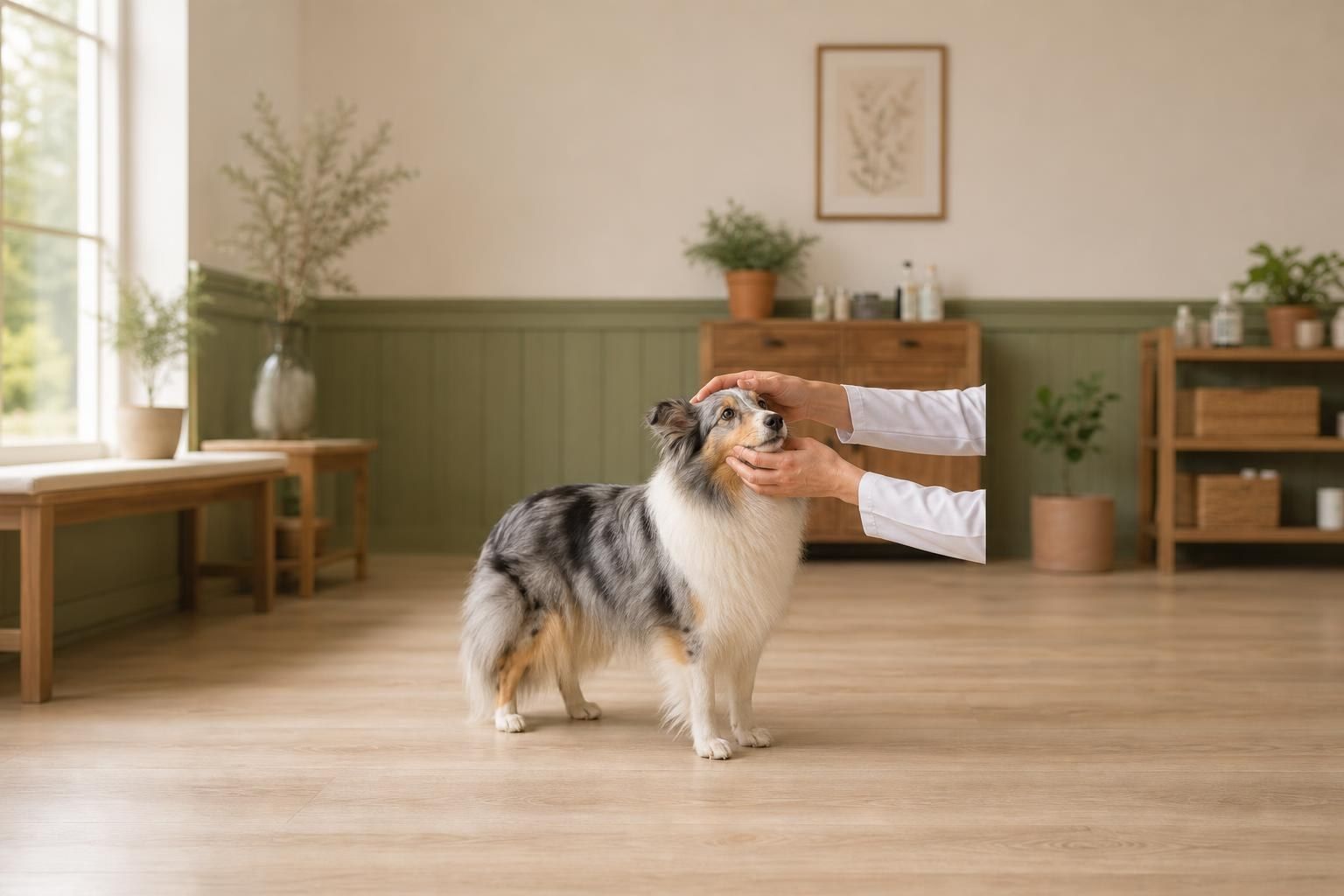
A long-lived breed with a few known weak spots
Breed listings from the AKC and Royal Canin give the Shetland Sheepdog a lifespan of 12 to 14 years. A 2024 UK study of more than half a million dogs found a median of 13.4 years, against 12.7 years for purebred dogs overall, which puts the breed comfortably above the middle of the pack. The breed overview covers size, coat and temperament.
The conditions below are the ones with good evidence behind them. Some are tested for by DNA before a puppy is born, some are picked up by an eye exam, and one, MDR1, matters every time your dog sees a vet. None of them is a reason to avoid the breed. All of them are reasons to choose a breeder who tests, and the puppy-buying guide lists the questions to ask.
The UC Davis Sheltie panel also tests for progressive retinal atrophy (Shetland Sheepdog type) and degenerative myelopathy, but the sources cited on this page give no breed figures for them, so ask a breeder which eye and DNA tests their dogs have had.
MDR1: the drug sensitivity every owner should test for
MDR1 is a gene mutation found in several herding breeds. Dogs that carry it can become very ill, or die, after receiving certain drugs that a normal dog clears without trouble. Washington State University puts the frequency at about 15 per cent in Shetland Sheepdogs, compared with roughly 70 per cent in Collies. An older genotyping study of 190 Shelties found 14.7 per cent carried one copy and 1.1 per cent carried two.
WSU advises that loperamide, the anti-diarrhoea drug sold as Imodium, be avoided in all dogs with the mutation. Ivermectin at the doses used on heartworm prevention labels, such as Heartgard Plus, is considered safe, but other uses of ivermectin need dosing advice from a vet. The list of drugs of concern also includes acepromazine, butorphanol and some chemotherapy drugs.
The only way to know a dog's status is to test. A DNA test settles it for life, because the result does not change. Keep a copy on your phone. An emergency clinic at two in the morning will not have your regular vet's file, and that one line on a report can change which sedative a dog receives. It is also the clearest health difference in the Cavalier or Sheltie comparison, where the spaniel's main worry is the heart instead.
Tell every vet
Share the MDR1 result with every clinic, boarding kennel and anyone else who might give your dog medication. If the status is unknown, ask the vet to treat the dog as possibly affected.
Collie eye anomaly and yearly eye exams
Collie eye anomaly (CEA) is an inherited abnormal development of structures in the eye, centred on choroidal hypoplasia, an underdeveloped layer of tissue at the back of the eye. Severity varies widely, from mild changes to blindness in the worst cases.
A DNA test for CEA is on the UC Davis Shetland Sheepdog health panel, and breeders use it to avoid pairing two carriers. A clinical eye exam is still useful as well, because it checks for problems a single DNA test does not cover. The OFA's eye registry uses exams by a board-certified veterinary ophthalmologist, and each result is valid for 12 months, which is why breeding dogs are usually re-examined every year.
For a pet owner, the practical step is simple: ask to see both parents' CEA DNA results and a recent eye exam report before buying, and mention any change in how your dog sees or reacts to light at the next vet visit.
Von Willebrand disease type III
Von Willebrand disease is an inherited bleeding disorder, and type III is its most severe form. Affected dogs can bleed spontaneously and bleed for a long time after an injury or surgery. Type III is on the UC Davis panel for the breed, so a breeder can test parents and avoid producing affected puppies.
The result matters most before any planned surgery, including a spay or neuter. If your dog's status is unknown, ask the vet whether a test makes sense before an operation.
Dermatomyositis: an inherited skin and muscle disease
Dermatomyositis is an inherited inflammatory disease of the skin and muscles seen in Shelties and Collies. It does not follow a simple one-gene pattern, which is why the UC Davis test reports risk rather than a plain clear or affected result.
The UC Davis risk test looks at three genetic regions, known as PAN2, MAP3K7CL and DLA-DRB1. In the research behind it, 9 of the 27 possible genotype combinations accounted for 93 per cent of cases. Breeders use the result to choose pairings that lower the chance of an affected litter. A higher-risk result in a pet does not by itself mean the dog will develop the disease, but it is worth putting on the vet's file so any skin change is checked early.
Ask a breeder how they use the test. A thoughtful answer, with the actual results in hand, is a good sign. A breeder who has never heard of it is a reason to keep looking.
Gallbladder mucocele and hypothyroidism
Shetland Sheepdogs are considered predisposed to gallbladder mucocele, a build-up of thick mucus in the gallbladder. A 2010 study linked it to an insertion mutation in a gene called ABCB4, with incomplete penetrance, meaning not every dog with the mutation develops the condition. There is no routine breeder screening for it in the sources used here, so this one sits with your vet rather than with the puppy paperwork.
Hypothyroidism, an underactive thyroid, is listed as a concern in the breed by secondary sources, but no reliable figure for how common it is could be found. If an adult dog's energy, weight or coat changes without an obvious reason, mention it, and the vet can decide whether a thyroid test makes sense.
Neither condition should frighten anyone away from the breed. Both are reasons to keep regular vet visits going into middle age, when a dog that seems slightly off is easy to put down to getting older.
What to ask for, and when
The table sets out the tests in one place. Most of them are done once, on the parents, before you ever meet a puppy. What stays with you as an owner is the MDR1 result, the vWD status before surgery, and a habit of mentioning anything new to the vet early.
Senior years deserve their own attention. A dog with a 12 to 14 year lifespan spends a long stretch as an older dog, and the grooming and care guide covers how a brushing session doubles as a check for lumps, skin changes and sore spots.
A Sheltie health timeline
- Before buyingParents' resultsMDR1, CEA, vWD, DMS risk, recent eye exam
- 8 wk+Going homeCopy of the puppy's or parents' MDR1 result
- First visitVet fileShare MDR1 and vWD status
- SurgeryBefore spay or neuterConfirm vWD status and drug plan
- Each yearAnnual checkEye exam for breeding dogs, vet review for all
| Condition | What it does | How it is screened |
|---|---|---|
| MDR1 | Severe reactions to certain drugs | DNA test, once for life |
| Collie eye anomaly | Abnormal eye development, mild to blinding | DNA test plus eye exam |
| vWD type III | Severe inherited bleeding | DNA test |
| Dermatomyositis | Skin and muscle inflammation | DNA risk test, three markers |
| Gallbladder mucocele | Thick mucus in the gallbladder | Vet assessment, no breeder screen |
| Hypothyroidism | Underactive thyroid | Blood test if signs appear |
Where the facts come from
- Washington State University: MDR1 in dogs
- Washington State University: breeds commonly affected by MDR1
- MDR1 genotyping in Shetland Sheepdogs (PMC)
- UC Davis Veterinary Genetics Laboratory: Shetland Sheepdog health panel
- UC Davis Veterinary Genetics Laboratory: dermatomyositis risk test
- ABCB4 insertion and gallbladder mucocele in Shetland Sheepdogs (PMC)
- OFA: eye certification (CAER)
- Scientific Reports: Longevity of companion dog breeds (McMillan et al., 2024)