Temperament: open arms or a quieter welcome
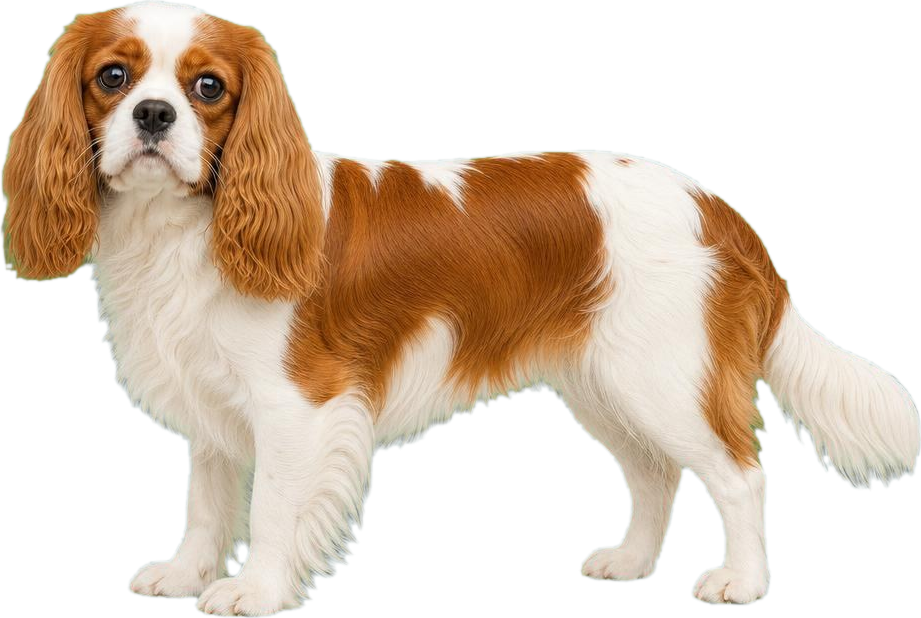
The UK Kennel Club standard sums up the Cavalier King Charles Spaniel as gay, friendly and non-aggressive, with no tendency to nervousness, and describes it as sporting, affectionate and absolutely fearless. In plain terms, a well-bred Cavalier expects to like everyone and usually does. Visitors, delivery drivers and the neighbour's children all get the same warm greeting.
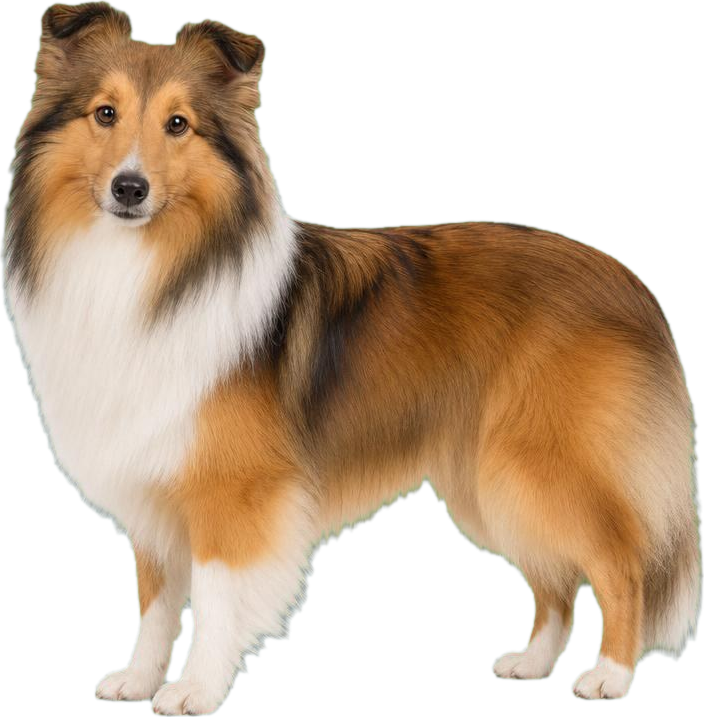
The CKC standard for the Shetland Sheepdog reads differently. It calls the breed intensely loyal, affectionate and responsive, and says it may be reserved with strangers, though never fearful. A Sheltie tends to save its full attention for its own people and size up newcomers before coming over.
Neither is better. They suit different homes. If you want a dog that greets every guest at the door, choose the Cavalier. If you want a devoted, watchful companion that responds to the smallest cue from you and keeps a polite distance from strangers, the Sheltie is the better fit.
Size and build
The two breeds are closer in size than their groups suggest. The CKC standard puts the Cavalier at 30.5–33 cm (12–13 in) and 6.25–8.25 kg (14–18 lb), and the CKC Sheltie standard sets the Sheltie at 33–40.75 cm (13–16 in) at the shoulder. Stand them side by side and the Sheltie is usually a little taller and a good deal fluffier.
Build is where they differ. The Cavalier is a compact toy spaniel made for a lap, with long feathered ears and a soft, rounded look. The Sheltie is a small working dog, lighter on its feet, with a coat that makes it look much bigger than it is. Both fit comfortably in a car, a condo or a townhouse.
The CKC standard describes Sheltie size by height, so judge it that way rather than by weight. A North American Sheltie near the 16-inch top of the range is a noticeably bigger dog than a Cavalier.
Coat, shedding and grooming time
The Cavalier's coat is long and silky, free from curl, with plenty of feathering, and the CKC standard allows no trimming apart from the underside of the paws. Regular brushing keeps the ears and feathering tangle-free, and the Cavalier grooming guide sets out the routine. It is real work, but it is light work.
The Sheltie has a double coat: a long, harsh outer layer over a short, dense, furry undercoat. Plan on brushing a couple of times a week, and more during a heavy shed, when undercoat comes out in handfuls. Mats form behind the ears, at the elbows and under the tail. The Sheltie grooming guide explains how to keep on top of it.
If dog hair on clothes and furniture is a deal-breaker, the Cavalier's lighter grooming load is the safer bet, though no dog is hair-free. If you enjoy a brushing session a couple of times a week and own a good vacuum, the Sheltie coat is manageable. Neither breed should be shaved.
Exercise and the herding instinct
The Cavalier's standard calls it sporting, and a daily walk with time to sniff and play suits the breed. It is a companion first, though, bred for company rather than for work. For an owner who walks every day but does not want a dog that needs a job, that balance is ideal.
The Sheltie comes from working stock. It descends from collies taken to the Shetland Islands, sits in the CKC Herding Group, and generally does best with something to think about as well as a walk. Training classes and CKC performance events such as agility, obedience and rally suit the breed well.
If you like the idea of teaching tricks or entering a local agility trial, the Sheltie will repay the effort. If your idea of a good weekend is a stroll to the café and an afternoon reading, the Cavalier is the easier match.
Health: the heart versus the drug gene
This is the biggest practical difference. Mitral valve disease (MVD) is the Cavalier's main health issue. Figures from Cavalier Health, a US owner-run resource, show that more than half of Cavaliers have an MVD murmur by age 5 and more than 90 per cent by age 10. The Cavalier King Charles Spaniel Club of Canada recommends heart screening by a cardiologist from age 1, using auscultation and echocardiography. Chiari-like malformation and syringomyelia are the second concern: a Dutch screening study of 1,020 Cavaliers found syringomyelia in 39 per cent. The Cavalier health-testing guide covers both.
The Sheltie's headline is MDR1, a gene mutation that makes dogs dangerously sensitive to certain drugs. Washington State University puts its frequency at about 15 per cent in the breed. Collie eye anomaly, von Willebrand disease type III and dermatomyositis are the other inherited conditions with DNA tests, explained in the Sheltie health guide.
Lifespans follow the same pattern. Cavaliers live around 10 to 14 years, with UK vet-record data suggesting about 10½ on average. Shelties are usually given 12 to 14 years. A 2024 UK study that covered both breeds found a median of 13.4 years for Shelties and 11.8 for Cavaliers. If a long life with fewer specialist visits is your priority, the Sheltie has the stronger record. If you choose a Cavalier, choose one from heart-tested parents and budget for cardiology checks from the first birthday.
Price and running costs in Canada
Puppy prices are similar. Canadian sources put a Cavalier from a reputable breeder at roughly $2,000–$4,000, with show-bred dogs higher, and an adopted Cavalier at as little as $100–$300. A single Canadian guide puts a Sheltie at roughly $2,000–$4,000 and shelter adoption at about $500–$600. Very cheap puppies of either breed, especially on classified sites, are a warning sign.
Running costs are where they part ways. The Ontario Veterinary Medical Association estimate reported for 2025 puts a typical adult dog at about $5,118 a year including insurance. A Cavalier adds regular cardiology appointments on top. A Sheltie adds brushing tools and, for some owners, occasional help from a groomer during a heavy shed. The cost calculator lets you build a first-year budget with Canadian figures.
Rescue routes are narrow for both. The national Cavalier club rehomes only one or two dogs a year, usually older ones. For Shelties, the Southern Ontario Sheltie Rescue Society in Burlington is the best-known option, with fewer choices elsewhere.
Living through a Canadian winter
Winter favours the Sheltie. Its double coat insulates well, and a brisk walk at −10 °C in Montréal or Edmonton suits it. Grooming guides and the Ontario SPCA both advise against shaving the coat for exactly this reason.
The Cavalier is a toy breed, and SPCA winter-safety advice puts toy breeds and dogs with medical conditions among those at greater risk in the cold. A Cavalier with MVD needs shorter outings in deep cold and a coat on the coldest days. Watch ears, tail and paws for frostbite in both breeds.
Salt affects them equally. The BC SPCA warns that the salt and ice melt used on sidewalks can hurt a dog's paws, so wash and dry the feet after every walk. It also calls antifreeze extremely poisonous to pets, so keep it well out of reach.
Which breed suits which household
Here is a straight answer for the most common situations.
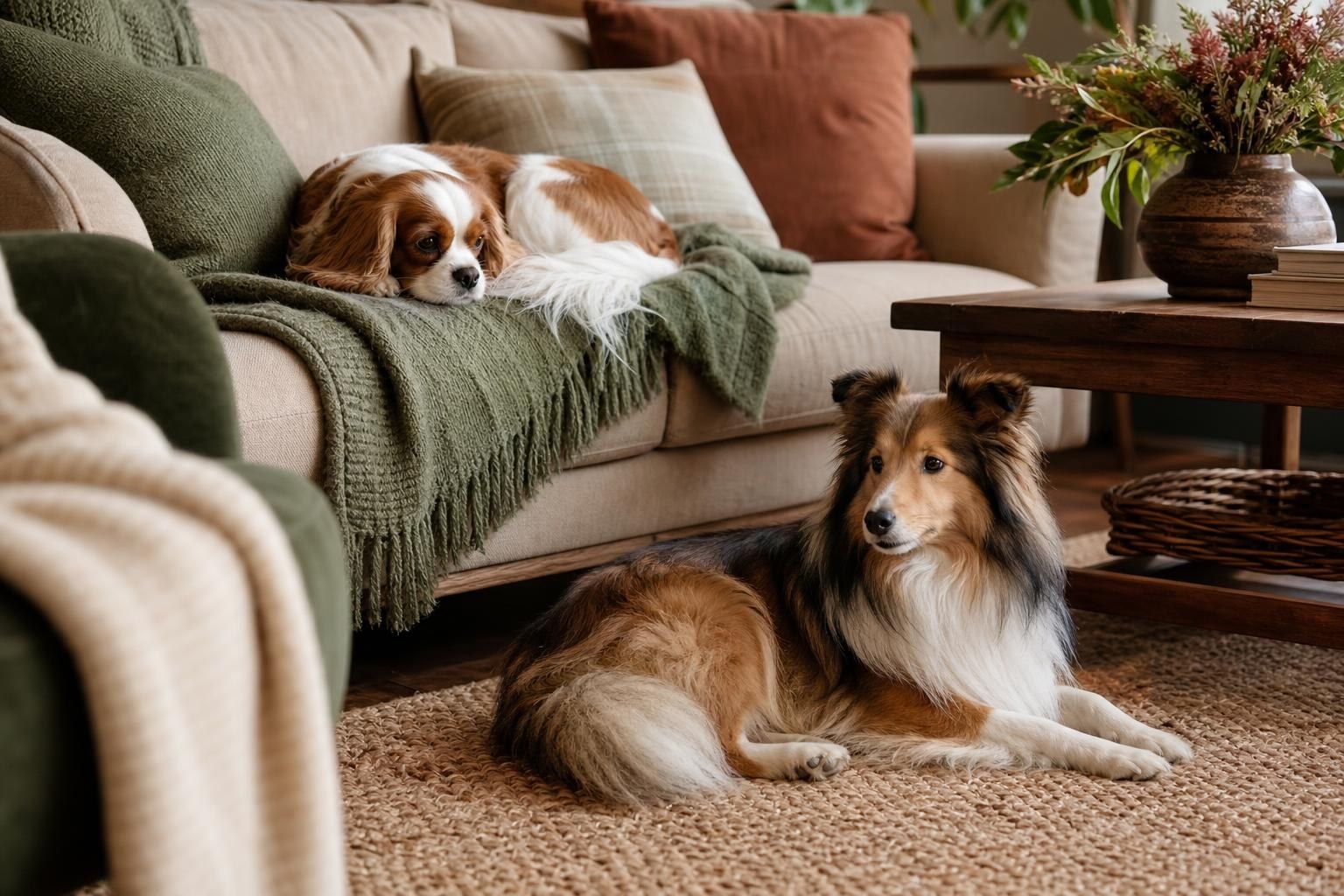
First-time owner or busy family with lots of visitors: choose the Cavalier. Its open temperament and lighter grooming make daily life simpler, as long as you buy from heart-tested parents and plan for cardiology checks. Active owner who enjoys training or dog sports: choose the Sheltie. It will match your energy and take to classes, agility or rally with enthusiasm.
Retired couple with time at home: either works. Pick the Cavalier for an easy, sociable lap dog. Pick the Sheltie if you would enjoy brushing a couple of times a week, want the longer expected lifespan, and prefer a dog that keeps its devotion for you. Cold-climate home with long winter walks: the Sheltie, without much argument.
Anyone who cannot tolerate dog hair or regular brushing: the Cavalier sheds less, though neither breed is low-maintenance. Whichever you choose, start with the official channels: the Cavalier breeder guide and the Sheltie puppy guide both begin with the CKC Puppy List and the national breed club's directory.
Where the facts come from
- Royal Kennel Club: Cavalier King Charles Spaniel breed standard
- Canadian Kennel Club: Cavalier King Charles Spaniel breed standard (PDF)
- Canadian Shetland Sheepdog Association: breed standard (CKC)
- Cavalier King Charles Spaniel Club of Canada: heart testing
- Cavalier Health: mitral valve disease
- Washington State University: MDR1 in dogs
- Spot Pet Insurance: Cavalier King Charles Spaniel cost
- Le Bernard: Shetland Sheepdog price in Canada
- BC SPCA: cold weather care guide
- Scientific Reports: Longevity of companion dog breeds (McMillan et al., 2024)
- Scientific Reports: life tables for UK companion dogs (VetCompass, 2022)