Salt air and small-dog winters: keeping a Cavalier in the Maritimes
Finding Cavalier people in Nova Scotia, New Brunswick or Prince Edward Island takes a little more asking around than in Toronto or Vancouver. There is a regional club, but no public website for it, and the nearest veterinary cardiologist may be some distance away. The national resources carry more weight here.
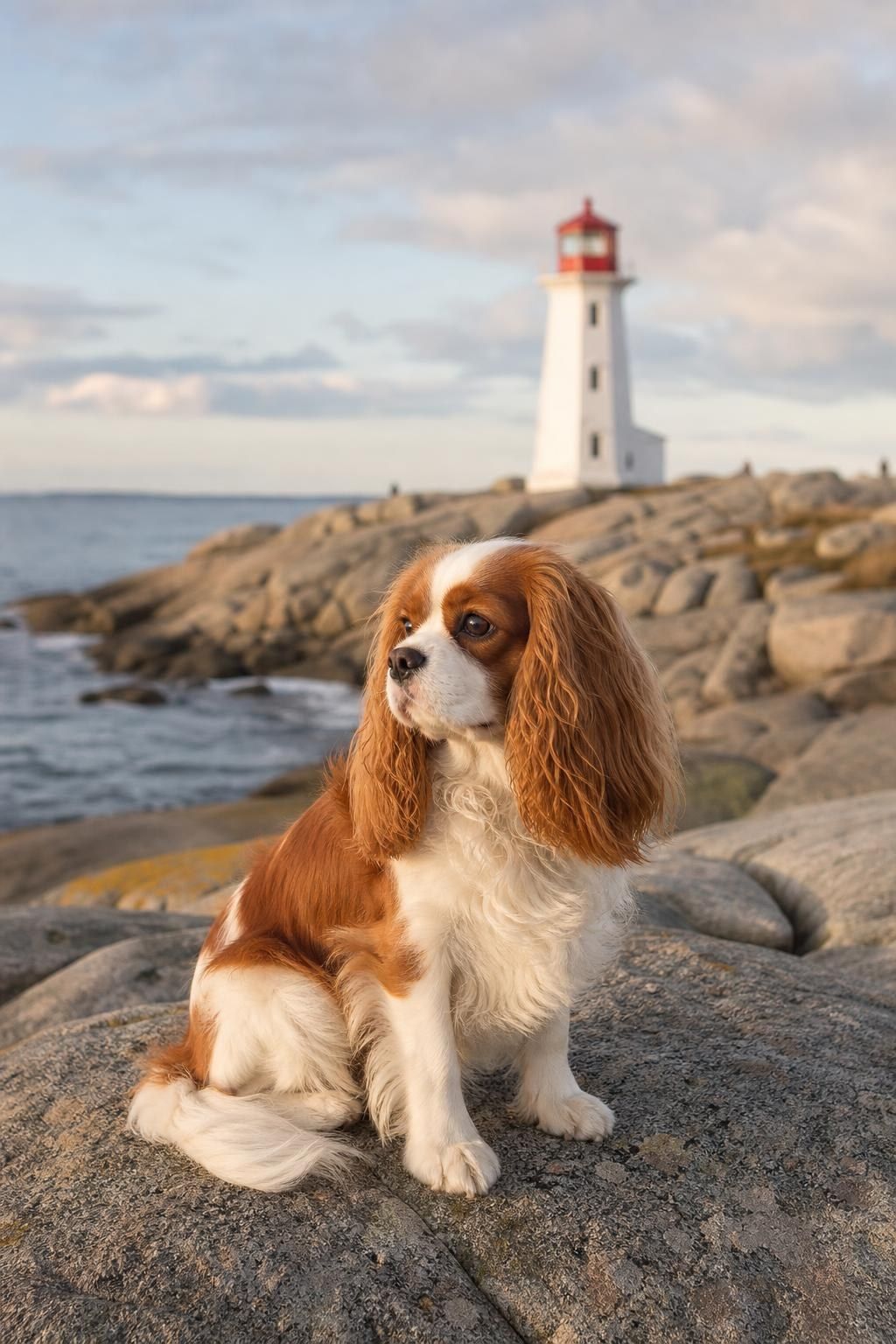
A club you reach by asking
The Cavalier King Charles Spaniel Club of Canada lists the CKCS Club of Atlantic Canada among its regional clubs. Unlike the clubs in southern Ontario and British Columbia, it has no web address on that list, so the national club is the way to reach it.
So the way in is indirect. Contact the national club through its regional clubs page and ask how to reach the Atlantic club, or ask a breeder from the national directory who is based in the region. A short email that says where you live and what you are looking for gives them something to pass on.
The same national directory and Code of Ethics apply to Atlantic breeders as to anyone else. Read the guide to finding a breeder before the first phone call, so you know which heart and eye results to ask about.
Shelters and directories in the region
For adoption and welfare, Nova Scotia and Prince Edward Island each have a provincial society with a working website. This guide did not confirm the equivalent organizations for New Brunswick, so it does not list one; the CKC and the national club cover all three provinces.
Judging by how few dogs the breed's own rescues handle, Cavaliers seldom pass through shelters, so it helps to register interest with the national club's rescue as well.
Beaches, dunes and a feathered coat
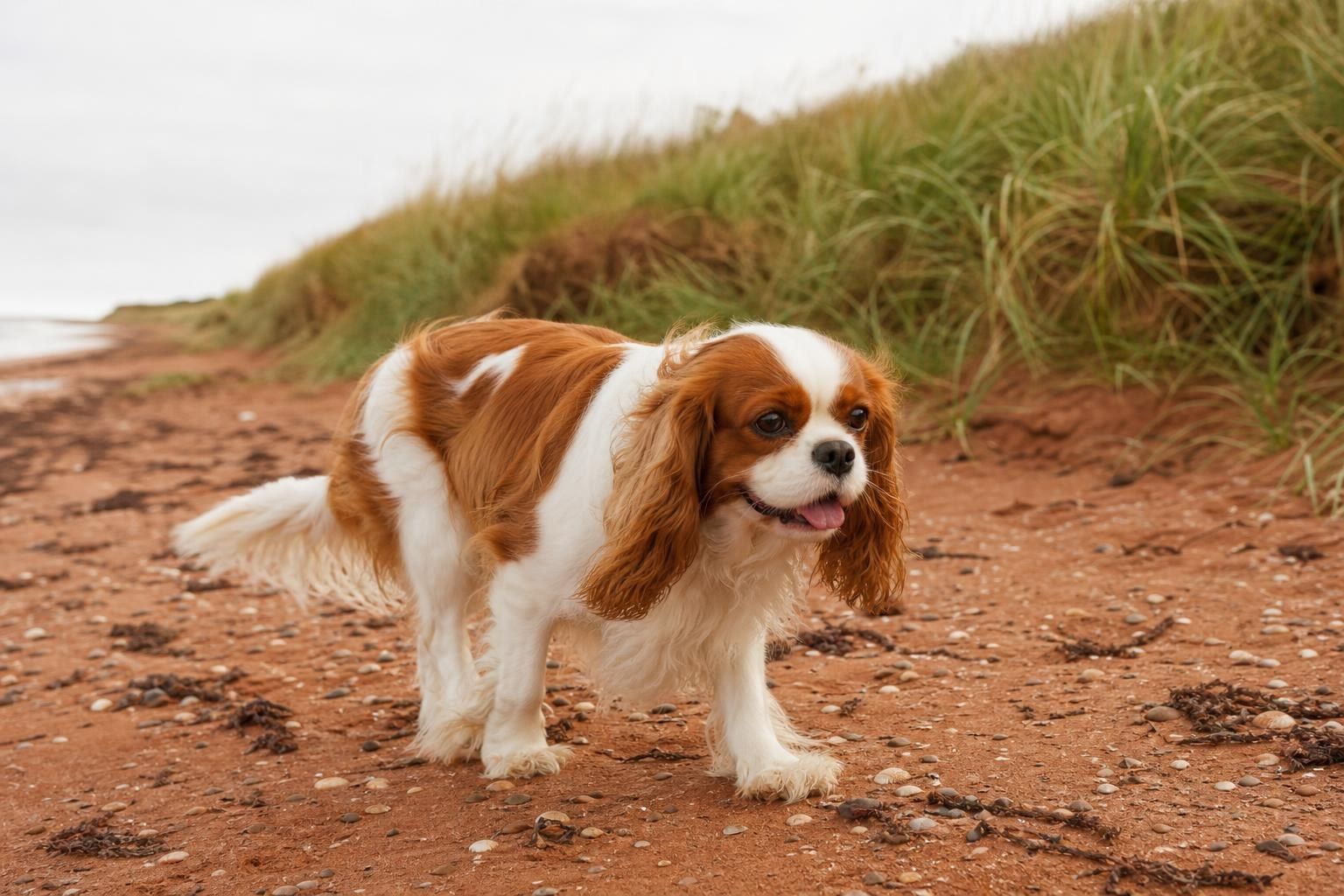
Summer in the region means beaches, and a Cavalier will happily spend an afternoon nosing along a dune line on the Island. Sand is the cost. It works into the long, silky feathering on the ears and legs and packs between the pads, the same places where winter salt and grit collect.
A rinse with fresh water after a beach day, then a thorough dry and a comb-through, prevents most of the trouble. Check between the toes. Wet ear leather on a long-eared dog is worth drying carefully; the grooming guide shows how.
On hot days pick the cooler ends of the day for long walks, carry water, and give the dog shade on the sand. If your Cavalier has a murmur, ask your vet how much summer exertion is sensible.
What the provincial rules say, and do not say
Ontario has a 2024 puppy-mill amendment and Quebec has a regulation that sets breeding ages and litter limits. New Brunswick licenses kennels where dogs are bred or boarded for payment: under its Pet Establishment Regulation, a kennel needs a licence from the New Brunswick SPCA, valid for one year, and must follow the Canadian Veterinary Medical Association's Code of Practice for Canadian Kennel Operations. This guide did not confirm a rule of that kind for Nova Scotia or Prince Edward Island, so there the provincial SPCA or humane society is the place to ask.
That leaves buyers relying more on the breeder's own standards. The national club's Code of Ethics and the CKC's requirements for breeders on its Puppy List are the reference points; the CKC says breeders who do not comply are removed from the list. Quebec's eight weeks with the mother is a sensible minimum to ask about anywhere, and the Quebec page sets out the other numbers in that regulation.
For a welfare concern about a dog or a breeder, contact the provincial SPCA or humane society.
Planning heart checks at a distance
The OVC Cardiology Service at Guelph says Canada has only about 25 board-certified veterinary cardiologists. This guide has no verified list of where any of them practise in Atlantic Canada, so the starting point is your regular vet and a referral.
The national club recommends cardiologist screening with an echocardiogram for every Cavalier from age one, pet or breeding dog, and says a regular vet visit is not sufficient for heart screening. With few specialists nearby, many pet owners in practice start with a yearly listen at the regular vet and a referral if a murmur appears. If travel is needed, book well ahead and take copies of earlier results. The health testing page explains what the results mean.
A heart condition also changes the winter plan, because dogs with medical conditions such as heart disease are among those at greater risk in the cold.
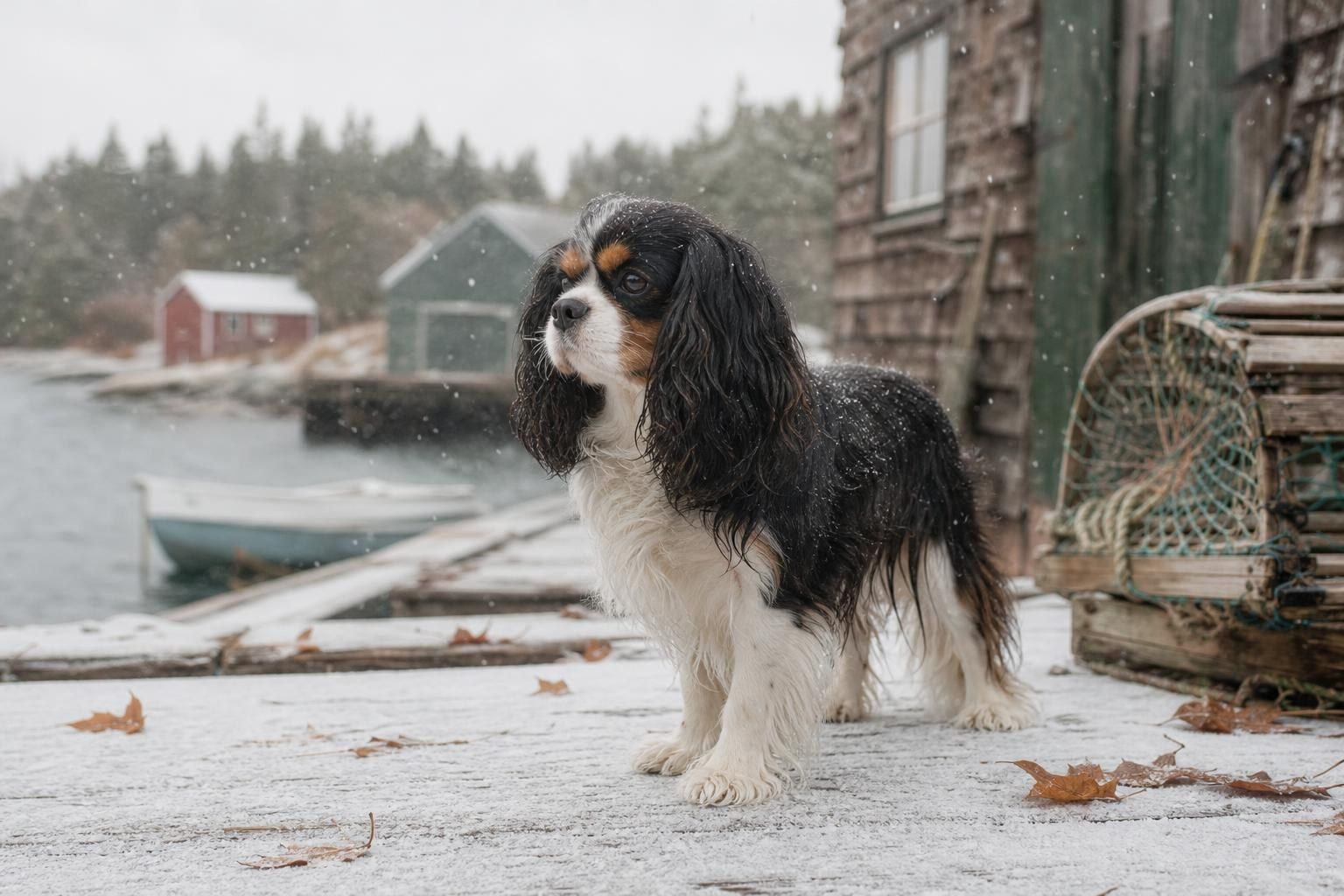
Wet cold on the Atlantic coast
Halifax's January mean over the 1971–2000 normals was −6.0 °C, close to Toronto's. On the coast the damp and wind often make it feel harsher, and wharves, steps and roads are salted. Advice from the BC SPCA and the Ontario SPCA applies equally well on an Atlantic waterfront.
Wash the feet and belly after walks on salted roads or wharves, then check the pads for cracks or redness.
Booties or a paw protectant help on long walks; the Ontario SPCA recommends booties and the BC SPCA a protectant.
A wet dog loses heat fast, so dry the coat when you get in rather than leaving it to air-dry.
Put frostbitten ears or paws in lukewarm water, pat them dry without rubbing, and call a vet.
Costs in Atlantic Canada
Fewer local breeders can mean travel costs on top of a puppy price of roughly $2,000 to $4,000 or more, and a cardiology visit may involve a trip. The calculator covers the yearly basics; add travel on your own line.
Questions people ask
1Is there a Cavalier King Charles Spaniel club in Nova Scotia?
The national club lists a CKCS Club of Atlantic Canada as one of its regional clubs, but gives no website for it. To get in touch, ask the Cavalier King Charles Spaniel Club of Canada for contact details, or ask a breeder from the national directory who lives in the region.
2Where can I adopt a dog on Prince Edward Island?
The PEI Humane Society runs adoption on the Island at peihumanesociety.com. Few Cavaliers come through shelters, so also register with the national club's rescue, which places one or two dogs a year across Canada. The rescue and adoption guide explains what adopting an older Cavalier involves.
3How cold does Halifax get for a small dog?
Halifax's January mean was −6.0 °C over the 1971–2000 normals, similar to Toronto. Wind and damp make coastal days feel colder. For a Cavalier, use a coat on raw days, wash salt off the feet after walks and dry the coat fully indoors.
4Can I find Maritime Cavalier breeders on the CKC Puppy List?
The CKC Puppy List can be searched by breed and province, so you can check Nova Scotia, New Brunswick and PEI separately. Some provinces may show few or no Cavalier breeders at a given time. Widen the search to neighbouring provinces and check the national club's directory too.
5Does Nova Scotia have a law on how old a puppy must be when sold?
This guide has not found a Nova Scotia rule on the age of sale, and it does not summarize laws it has not checked. Quebec requires at least eight weeks with the mother, and that is a sensible minimum to ask any breeder about. For welfare concerns, contact the Nova Scotia SPCA.
6Is there a Sheltie club in the Maritimes?
The Canadian Shetland Sheepdog Association lists no member club in the Maritimes; its member clubs are in British Columbia, Alberta, Saskatchewan and Manitoba. Sheltie buyers in the region can use the CSSA's own pages and the CKC Puppy List. The Sheltie puppy guide covers the questions to ask.
The other provinces
Alberta
Edmonton's deep cold, Calgary's chinook swings, and what a small dog with a heart risk needs from an Alberta winter.
Read the notes on AlbertaBritish Columbia
Wet coastal winters, ferry trips with a toy dog, and why the BC Cavalier club's rehoming list is closed for now.
Read the notes on British ColumbiaOntario
The PAWS Act, the 2024 puppy-mill amendment, rabies rules at three months and the cardiology service at Guelph.
Read the notes on OntarioQuebec
The February 2024 welfare regulation in plain English, no regional club, and the 2027 National Specialty in Terrebonne.
Read the notes on Quebec