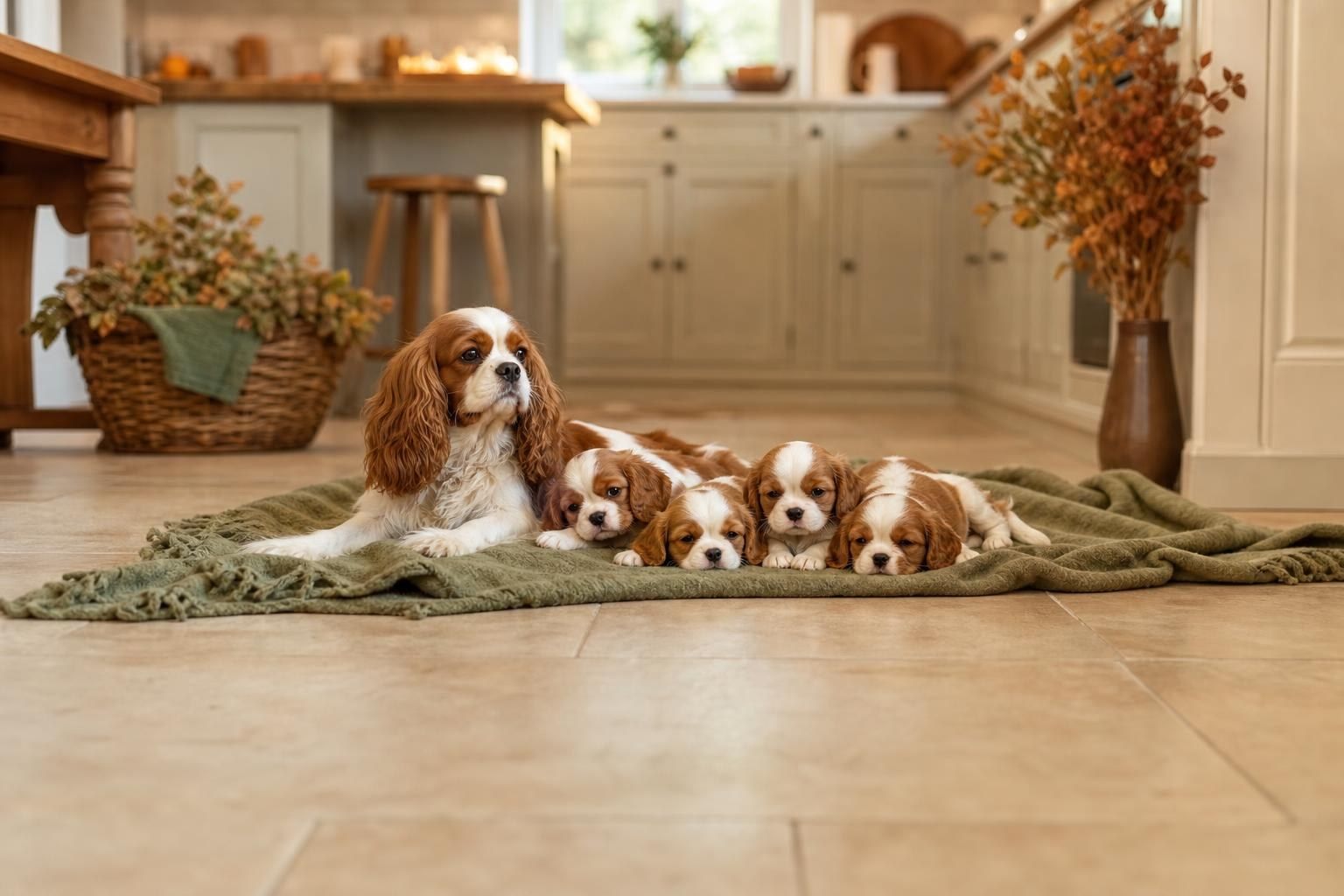
Where Cavalier King Charles Spaniel breeders in Canada are listed
Searching for a breeder goes faster with two official lists than with a search engine. The first is the Canadian Kennel Club's Puppy List, a searchable database of CKC Member Breeders that can be filtered by breed and province. The CKC says breeders who do not comply with its standards are removed from the list, and it advises buyers to contact the national breed club for referrals as well.
That club is the Cavalier King Charles Spaniel Club of Canada, founded in 1973 and recognized by the CKC as the national club for the breed. It publishes a Breeder Directory and a Code of Ethics. Read the code before you read the directory, because it tells you what the breeders listed there have agreed to do.
Regional clubs fill in local knowledge. The national club lists the Cavalier Fanciers of Southern Ontario, the CKCS Club of BC, the CKCS Club of Atlantic Canada, the Eastlake Cavalier Club and the Interior CKCS Club. Club members can often point you to breeders who show and test their dogs, and to litters being planned. No Quebec club appears on the national list, which the Quebec page covers in more detail.
A listing is a starting point, not a guarantee. The CKC list shows membership, and the club directory shows a signature on a code. Neither replaces seeing the health reports yourself.
Health certificates a good breeder shows without being asked
The heart comes first in this breed, and the paperwork should say so. The Cavalier King Charles Spaniel Club of Canada recommends screening by a board-certified veterinary cardiologist from age one, with both auscultation and an echocardiogram, and it states plainly that a routine vet visit is not sufficient. Its Breeders' Guidelines follow the 1998 MVD Breeding Protocol: breed only from dogs at least two and a half years old and free of murmurs, whose own parents were murmur-free at age five.

So ask to see a cardiologist's report for each parent, dated within the past year. A note from a family vet saying the heart "sounds fine" is not the same document, and a breeder who offers one in its place has told you something useful.
The rest of the file is shorter. Both parents should have a CAER eye exam by a board-certified ophthalmologist, valid for 12 months. Hips and kneecaps should have been evaluated by a vet, and both parents should have DNA results for episodic falling syndrome and dry eye curly coat syndrome. An MRI for Chiari-like malformation and syringomyelia is a strong extra that not every breeder does; if the parents were scanned, ask for the grades and the age at scanning.
The health testing guide explains what each result means, from murmur grades to the letters on an MRI report.
Questions to ask a Cavalier breeder before you commit
These questions to ask a Cavalier breeder work by phone or email before a visit. A good breeder will answer most of them in detail and will usually have a few questions for you too.
- Can I see the cardiologist's reports for both parents, and how old was each dog at its latest exam?
- Were the grandparents still murmur-free at five?
- Do both parents have current CAER eye exams and DNA results for episodic falling and dry eye curly coat?
- Were the parents scanned by MRI for CM/SM, and what were the grades?
- Are the parents and the litter registered with the CKC?
- May I visit and meet the mother, and the father if he lives with you?
- Where are the puppies raised, and how are they socialized?
- At what age do the puppies go home?
- What does your contract say about health, registration and returning the dog?
- Are you a member of the national club or a regional club?
Listen to how the answers come. Clear dates and documents are a good sign. Vague reassurance, or irritation at being asked, is not.
Visiting the litter and meeting the mother
The national club's advice to buyers starts with a simple step: visit the breeder. Seeing where the puppies live tells you more than any website or social media page can.
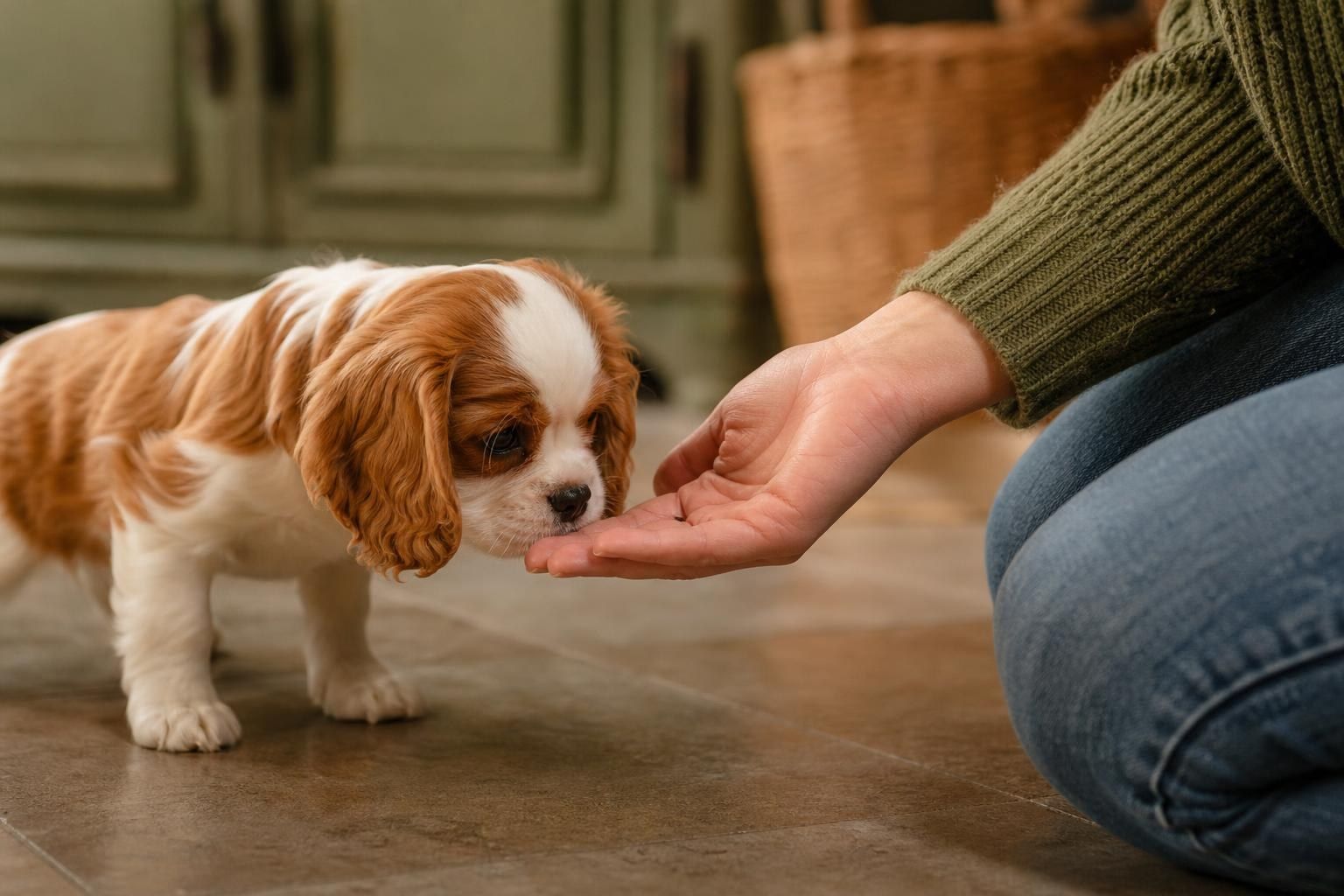
Ask to meet the mother. A Cavalier's temperament, in the words of the UK breed standard, is friendly and non-aggressive with no tendency to nervousness, and that is what an adult Cavalier at home should look like: curious, soft and keen to greet visitors. A nervous or hidden mother is worth noticing. The father may live in another home, but his health papers should still be on file.
Look at the puppies' surroundings with plain eyes. Are they in the house, used to ordinary noises and people? Do they look clean, alert and well fed? Quebec's regulation lets a puppy that is unweaned, unsocialised, visibly sick or malformed be sold only after the seller discloses the problem and the buyer confirms it in writing, and that list makes a sensible checklist anywhere in Canada.
Take your time. A good breeder expects you to go home and think, and some prefer it.
CKC registration, contracts and going-home age
The Cavalier club's buyer advice asks you to confirm CKC registration for both parents and for the puppy itself. Registration does not certify health, but it confirms the pedigree and places the breeder under the CKC's rules. Mixed-breed dogs such as Cavapoos cannot be registered as a breed, which is one reason the guide to Cavalier mixes treats them separately.
Read the contract before paying a deposit, not on pickup day. Look for what it says about the health of the puppy at sale, what happens if a serious inherited problem appears, spay and neuter terms, and whether the breeder will take the dog back at any age. The national club notes that most owners who can no longer keep a Cavalier return it to the breeder first, and that is exactly the arrangement a buyer wants in writing.
Puppies should not leave before eight weeks. Quebec's regulation, in force since 10 February 2024, requires puppies to stay with their mother for at least eight weeks, and Ontario's 2024 puppy-mill law treats separating puppies from their mothers before eight weeks as one of the conditions of a puppy mill. A breeder who prefers to wait a little longer is no cause for concern.
Provincial rules that apply to breeders
Quebec and Ontario have the rules a buyer is most likely to meet. Quebec's Animal Welfare and Safety Act is backed by a regulation on the welfare and safety of domestic companion animals and equines, in force since 10 February 2024. Under it, dog mating may begin at 18 months or at the second heat, a female may have no more than three litters in two years (and no more than two from consecutive heats), and commercial breeders must consult a vet before a first mating. A CKC summary also reports a maximum of 50 cats and dogs over six months old for commercial breeders, in effect from August 2022 with five years to comply.
In Ontario, the Provincial Animal Welfare Services Act was amended by the Preventing Unethical Puppy Sales Act, 2024, which prohibits operating a puppy mill. According to Animal Justice, the conditions include separating puppies from their mothers before eight weeks and breeding females under one year old. The PAWS Act itself sets the minimum fine at $10,000, or $25,000 if a dog dies or has to be euthanized. Check Ontario's e-Laws for the date each part takes effect; the Ontario page covers the province in more detail.
New Brunswick also licenses kennels that breed dogs, and British Columbia holds commercial breeders to the CVMA kennel code; the Canada page has the details. None of these rules is specific to Cavaliers. The breed club's Code of Ethics and the CKC's member standards are the practical yardstick, and provincial SPCAs handle welfare complaints.
Red flags, prices and the wait for a puppy
Some warning signs are worth knowing by heart. The national club warns buyers away from puppy mills and backyard breeders, and the pattern is easy to spot. A breeder who will not let you visit, who offers to meet in a parking lot, who keeps several breeds or who always has puppies available is running a different kind of operation from the one described above. Pressure to pay quickly is another.
Price is a signal too. Two Canadian cost guides put a Cavalier from a reputable breeder at roughly $2,000 to $4,000, with show-bred puppies up to about $4,500, while classified ads on sites such as Kijiji have been seen at around $1,000. A price far below the usual range nearly always means the screening was skipped. The Cavalier price and cost calculator sets out the full first-year budget.
Expect to wait. A breeder who screens every parent and raises each litter in the house cannot produce puppies on demand, and a breeder with puppies ready every month is a red flag in its own right. If a wait feels too long, an adult dog may be an option; the rescue and adoption guide explains how rarely Cavaliers come up and where to look.
Next stopRescue and adoptionWhere the facts come from
- Canadian Kennel Club: Puppy List
- Canadian Kennel Club: Choosing a responsible breeder (infographic)
- Cavalier King Charles Spaniel Club of Canada
- Cavalier King Charles Spaniel Club of Canada: Breeder Directory
- Cavalier King Charles Spaniel Club of Canada: Code of Ethics
- Cavalier King Charles Spaniel Club of Canada: Regional clubs
- Cavalier King Charles Spaniel Club of Canada: Heart testing
- Gouvernement du Québec: Obligations for the reproduction of domestic animals
- Ontario: Provincial Animal Welfare Services Act, 2019
- Animal Justice: New Ontario law on puppy mills
- Royal Kennel Club: Cavalier King Charles Spaniel breed standard