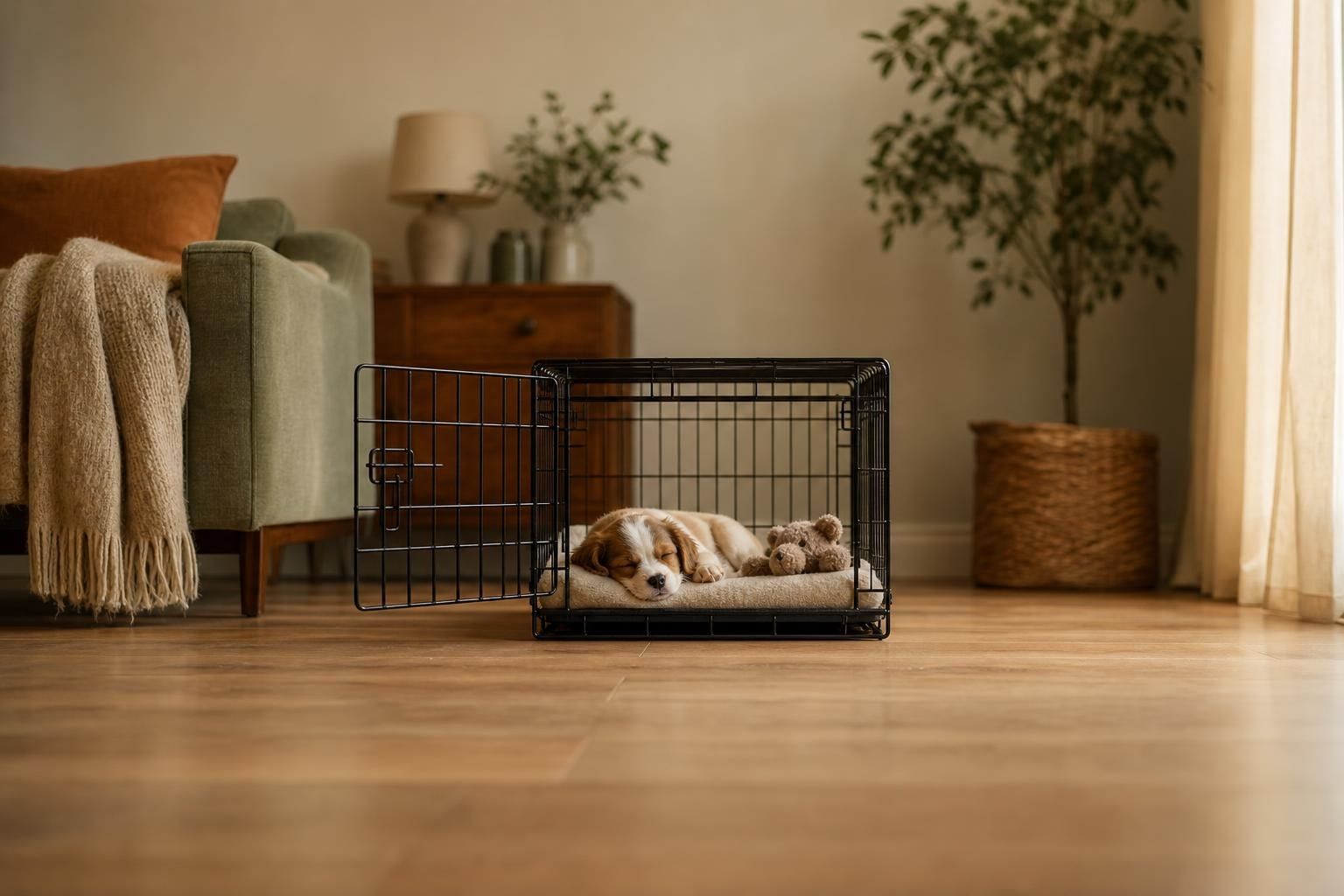
Before the puppy comes home
Most of the work starts before pickup day. Set up a crate with a soft blanket in a room where people spend time, put a baby gate across stairs, and move electrical cords and shoes out of reach. A Cavalier puppy is small and quick, and it will investigate everything at nose height.
Ask the breeder for the puppy's vet record, the date and type of any vaccine already given, the food it eats and how often, and a copy of the contract and the CKC registration papers. Buy a small bag of the same food so there is no sudden change in the first week. The cost calculator includes a supplies line for the crate, bed, leash, brush and gates.
Book the first vet appointment before the puppy arrives. Clinics fill up, and a check within the first few days is easier to arrange in advance.
Eight weeks or later: the right age to go home
In Quebec the answer is set by regulation: since 10 February 2024, puppies must stay with their mother for at least eight weeks, and an unweaned or unsocialised puppy may be sold only if the seller discloses this beforehand and the buyer confirms it in writing. In Ontario, the Preventing Unethical Puppy Sales Act, 2024 lists separating puppies from their mothers before eight weeks among the conditions of a puppy mill. This guide did not find a go-home age written into other provinces' rules, so eight weeks is a sensible floor everywhere.
Some breeders prefer to keep a toy-breed puppy a little longer. That is not a warning sign. Extra days with the mother and littermates give a puppy more time to learn play manners.
The drive home is the puppy's first big change. A secure carrier, a towel that smells of the litter and a second person in the car make it easier. The page on Cavaliers in Quebec covers that province's rules in more detail.
Vaccines, rabies and the first vet visits
The first vet visit is a general check: heart, eyes, ears, skin, weight and the vaccine record from the breeder. Bring a stool sample if the clinic asks for one, and ask about microchipping if it was not done before the puppy left. Spot Pet Insurance prices a microchip at about $60 to $80 in Canada; whether one is mandatory depends on your municipality's licensing rules.
Vets across North America widely follow the AAHA 2022 canine vaccination guidelines. They call for a core combination vaccine against distemper, adenovirus and parvovirus, given as at least three doses between 6 and 16 weeks of age, two to four weeks apart, then a booster within a year and every three years after that. Leptospirosis is given as two doses two to four weeks apart from 12 weeks, then yearly. In practice your vet will usually schedule visits at roughly 8, 12 and 16 weeks.
Rabies is set by law. In Ontario, Regulation 567 under the Health Protection and Promotion Act requires every dog aged three months or older to be vaccinated against rabies, and the vet issues a certificate and a tag. Rules elsewhere differ, so ask your clinic what applies in your province.
Keep every record in one folder from the start. It will matter at the cardiologist's office a year from now.
A first-year health timeline for a Cavalier puppy
- 8 wkHome and first vet visitExam, vaccine record, microchip
- 6–16 wkCore vaccine seriesAt least 3 doses, 2–4 weeks apart
- 12 wk+Leptospirosis2 doses, 2–4 weeks apart
- 3 moRabiesRequired by law in Ontario
- 1 yrBoosters and heartCore booster; first cardiologist exam
Crate training and house training through a Canadian winter
A crate gives a puppy a den and gives you a way to prevent accidents at night. Keep it near you for the first weeks, keep sessions short, and never use it as punishment. A blanket and a chew make the crate a place the puppy wants to be.
House training is mostly about timing. Take the puppy out after every sleep, every meal and every play session, praise it quietly when it goes, and pick a spot close to the door. Accidents happen; clean them without fuss.
Winter makes all of this harder. A puppy that has lived indoors for eight weeks may balk at snow, and a small dog loses heat quickly. Keep early trips short, clear a patch of ground if the snow is deep, and use the time outside for business rather than play. Frostbite most often affects ears, tail and paws, and small and young dogs are among those at greater risk.
Salt is the other winter hazard. The BC SPCA notes that the salt and ice melt used on sidewalks can hurt a dog's paws, and advises cleaning them with warm water and towel-drying them after walks. The Ontario SPCA suggests booties and wiping the paws and underside after walks. A towel by the door is the simplest fix.
Antifreeze and small dogs
The BC SPCA calls antifreeze extremely poisonous to pets and notes that it tastes sweet. Wipe up drips in the garage, and if the puppy may have licked any, go to a vet right away.
Socializing a Cavalier puppy
The UK breed standard describes the Cavalier as friendly and non-aggressive, with no tendency to nervousness. Genes help, but the first months decide how that temperament shows. A puppy that meets calm adults, children, other vaccinated dogs, car rides and ordinary household noise grows into an easy companion.

Keep each new experience short and pleasant, and let the puppy approach in its own time. Reward calm curiosity with a treat. Ask your vet when the puppy can safely meet other dogs and walk in public places, given its vaccine schedule.
Basic cues fit into the same sessions. Sit, come and a loose lead are the useful ones, and small food rewards suit a sociable breed. Puppy classes help too, once your vet is comfortable with the timing.
Feeding a growing toy spaniel
Small puppies do best on small, regular meals. Keep feeding the breeder's food at the same times for the first week or two, and if you change it, mix the old and new over several days.
Weigh rather than guess. An adult Cavalier is meant to be small, between 6.25 and 8.25 kg (14 and 18 lb) under the Canadian Kennel Club standard, which prefers a dog well between those weights. Extra weight is far easier to prevent than to take off. Ask your vet to show you how to feel for the ribs and check the waist.
Keep treats small enough that training does not become a second dinner. Pieces of the puppy's own kibble work well.
Grooming habits and the first heart check
The Cavalier coat is long and silky with plenty of feathering, and the CKC standard allows no trimming apart from the underside of the paws. A puppy coat is easy, but this is the time to teach the habits an adult coat needs: brushing on a lap or a table, handling ears and feet, and nail trims. A few minutes several times a week is plenty. The grooming guide sets out the adult routine.
Lift the ears and look inside each time you brush. Check between the pads too, since hair grows there and holds snow and salt in winter.
Around the first birthday comes the appointment that matters most for this breed. The Cavalier King Charles Spaniel Club of Canada recommends heart screening by a board-certified veterinary cardiologist from age one, with an echocardiogram, because a routine check at the family vet is not enough. Ask your vet for a referral in good time; the health testing guide explains what that first exam looks for, and the breed profile covers what the adult dog will be like.
Next stopProvincesWhere the facts come from
- Canadian Kennel Club: Cavalier King Charles Spaniel breed standard (PDF)
- AAHA 2022 canine vaccination guidelines: core and noncore vaccines
- Ontario: R.R.O. 1990, Reg. 567 (Rabies Immunization)
- Gouvernement du Québec: Obligations for the reproduction of domestic animals
- Animal Justice: New Ontario law on puppy mills
- BC SPCA: cold weather care guide
- Ontario SPCA: cold weather pet safety tips
- Royal Kennel Club: Cavalier King Charles Spaniel breed standard
- Cavalier King Charles Spaniel Club of Canada: Heart testing
- Spot Pet Insurance Canada: Cavalier costs