Rain gear, ferry decks and a paused rescue list: Cavaliers in BC
Vancouver gets about 1,199 mm of precipitation a year, and a Cavalier's long ears and leg feathering collect a fair share of it. Rain, not frost, shapes daily life with the breed on the coast. The province's Cavalier club is active, but its rehoming program is not taking applications.
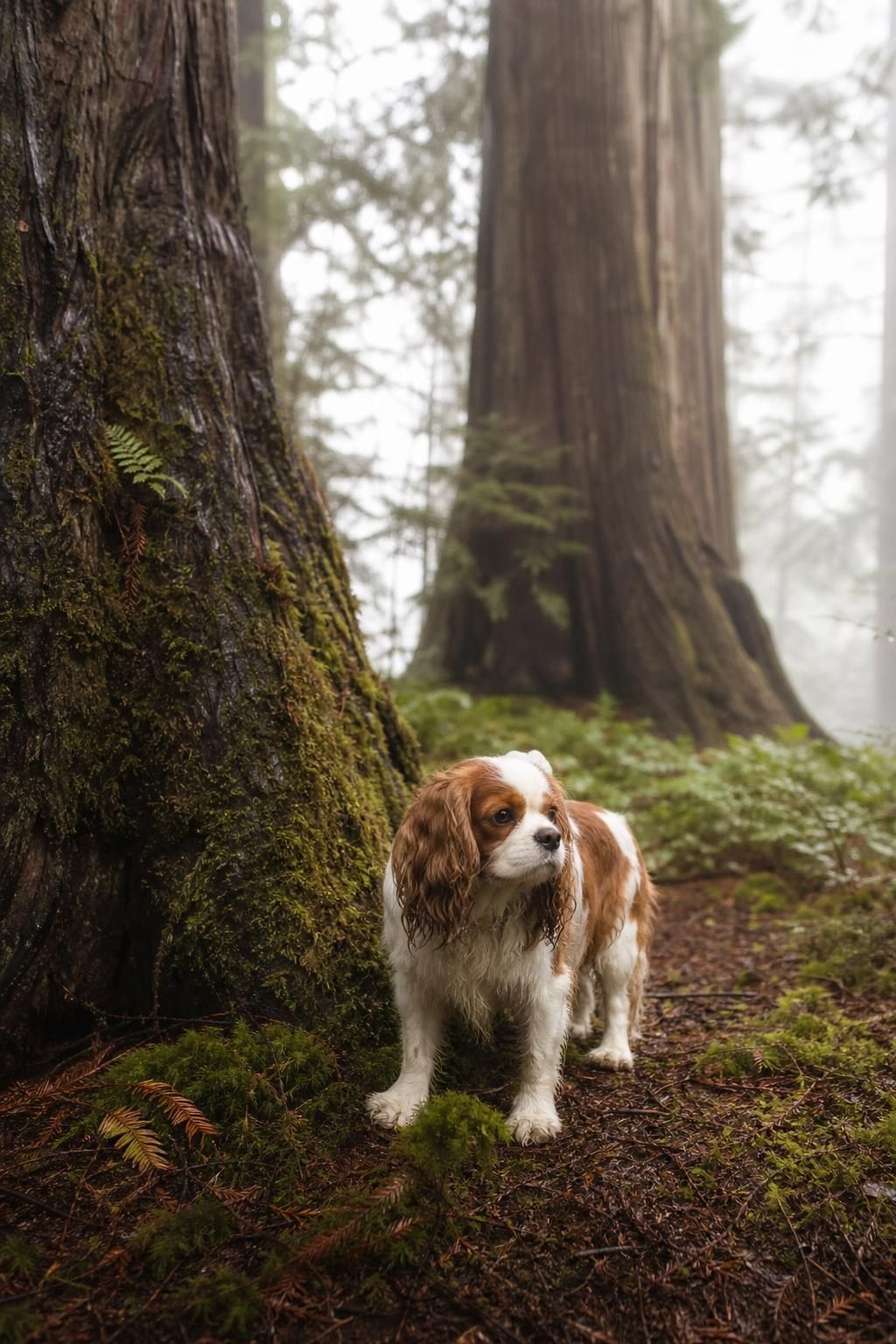
Living with a wet coat
A January mean of +3.3 °C (Vancouver, 1971–2000 normals) is mild by Canadian standards. The cold is rarely the problem here. The wet is, and a towel by the door earns its place.
The Cavalier's coat is long and silky, with plenty of feathering, and the CKC standard asks that it be left untrimmed apart from the underside of the paws. On a wet seawall walk that feathering soaks up water and grit, and the ear leather stays damp long after the dog is back indoors. Drying the ears properly, and combing out the feathering behind them before it mats, is most of the West Coast routine. The grooming guide covers the tools and the order of work.
Feet need the same attention. Mud and sand pack between the pads, and the hair there holds moisture. A quick check after the evening walk is enough for most dogs, with a closer look if the dog starts licking its paws.
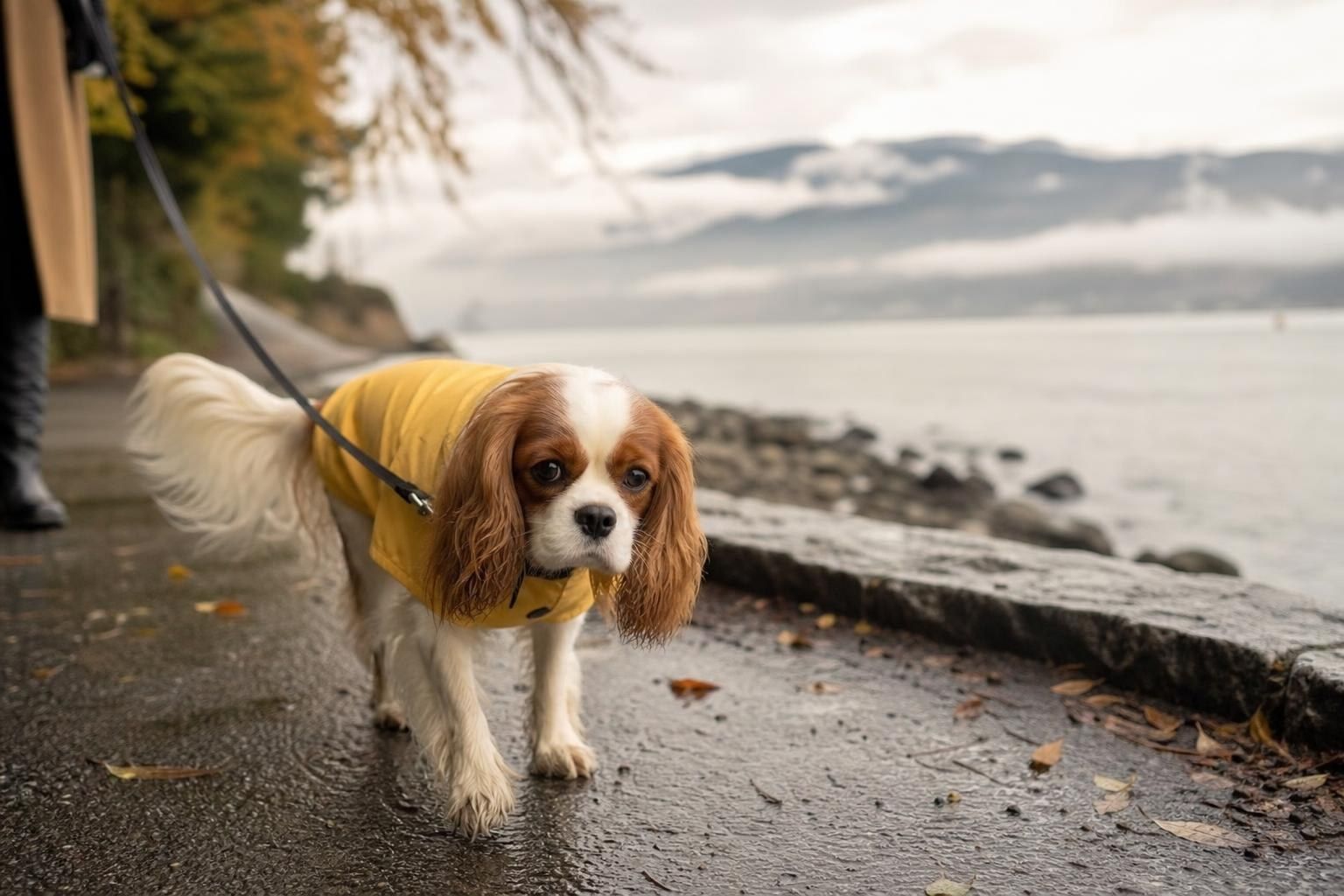
A light rain jacket helps some dogs and annoys others. Try one on a short walk before relying on it.
The Club of BC and its closed rehoming list
British Columbia has one of the few regional Cavalier clubs in Canada with its own website, the CKCS Club of BC, listed by the national club as a regional member. For anyone hoping to adopt, though, its rehoming page carries a clear message: the program is not currently accepting adoption applications, and the club says it has not received dogs in many years. It also does not take crossbreeds, so Cavapoos and Cavachons are outside its scope.
That is less discouraging than it sounds. The national club's rescue explains that most owners who can no longer keep a Cavalier return it to the breeder first, which keeps many dogs out of the rescue system. The national rescue itself rehomes only one or two dogs a year, usually older and sometimes with health issues, and keeps a long waiting list.
For a realistic adoption plan in BC, register interest with the national rescue, keep an eye on the BC SPCA, and read the rescue and adoption guide for what taking on an older Cavalier involves, especially the heart checks.
Ferry crossings with a small dog
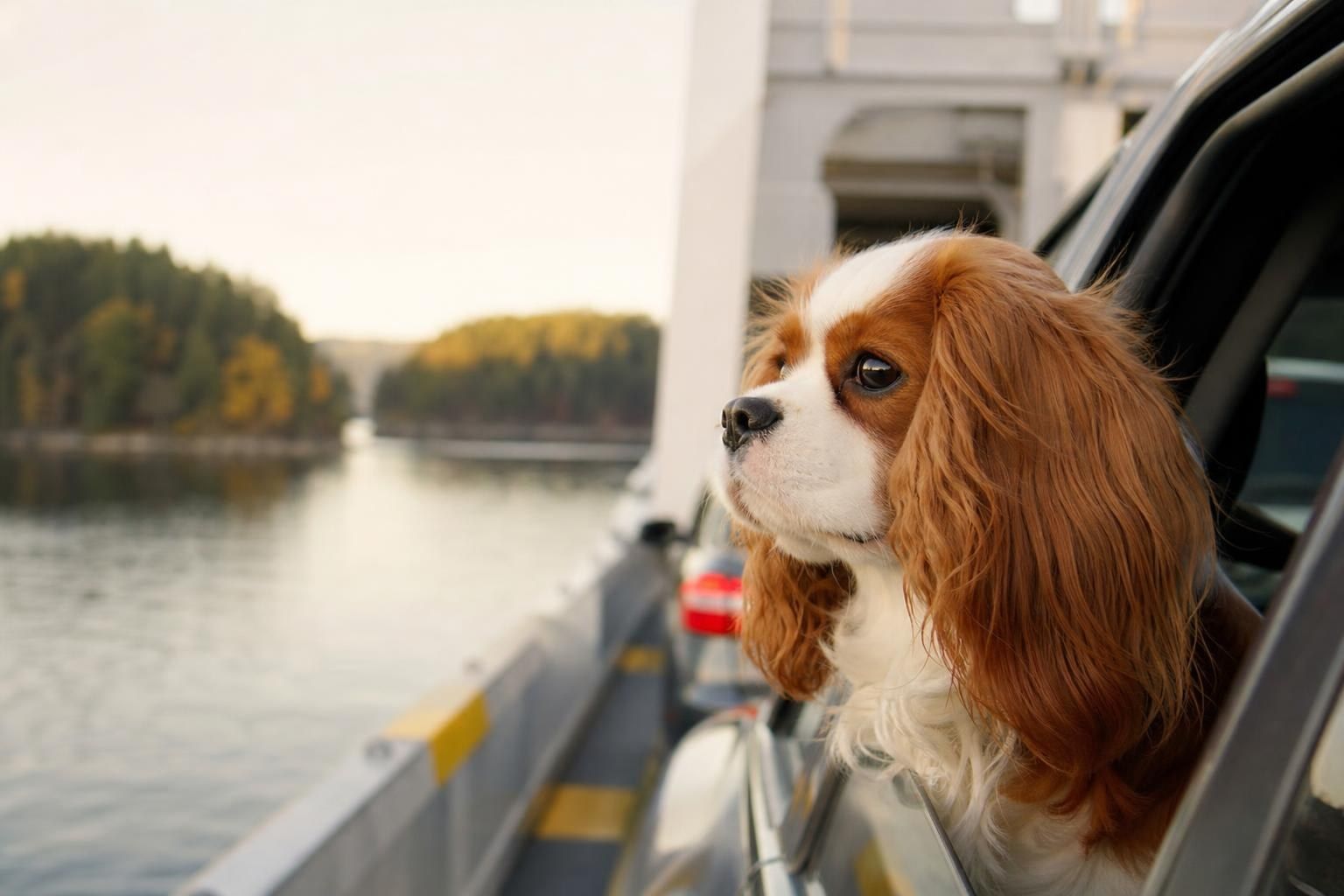
Island trips are part of life in much of the province, and a Cavalier is easy to bring along: light enough to carry, calm enough to settle in a car. The rules for animals on board are set by the ferry operator and can change by route and season, so this guide does not repeat them. Check the operator's current pet policy before you sail, and again if you are booking a different route.
A few things hold whichever rules apply. Bring water and a bowl, a lead that clips on before the car door opens, and a towel for the deck. A dog with a known heart murmur should not be left in a warm car for a long crossing; ask your vet what is sensible for your dog.
Ferry decks are also windy and wet, which brings the ear-drying routine back into play at the other end.
Contacts for BC owners
Start with the provincial club for local news and the national directory for breeders. The BC SPCA is the province's welfare society and publishes the winter safety advice quoted further down this page.
Heart checks west of the Rockies
This guide has no verified list of cardiology clinics in British Columbia, so it will not name one. The route is the same as anywhere outside Guelph: ask your regular vet for a referral to a board-certified veterinary cardiologist. The OVC Cardiology Service notes that Canada has only about 25 such specialists, so expect a wait.
The national club recommends cardiologist screening, with auscultation and an echocardiogram, for every Cavalier from age one, and says a regular vet visit is not sufficient for heart screening. In practice many pet owners start with an annual listen at the regular vet and a referral if a murmur appears. Before you buy a puppy, ask to see the parents' cardiologist reports; the health testing page lists the other clearances worth seeing.
BC also has two Sheltie clubs listed by the Canadian Shetland Sheepdog Association, the Shetland Sheepdog Club of BC and the West Coast Island SSA, mostly reachable through Facebook. They are no help with a Cavalier, but useful if the Sheltie is still on your list.
When the coast does turn cold
Most coastal winters are grey and wet rather than frozen, but cold snaps do arrive, and winters inland are a different matter; local normals are published by Environment Canada at climate.weather.gc.ca. The BC SPCA's cold-weather advice is short and specific, and it applies to a small dog in Victoria as much as in Prince George.
After walks on salted paths, clean the feet with warm water and towel-dry them, since salt and ice melt can hurt a dog's paws.
Before a walk in the cold, rub a little petroleum jelly into the pads to help protect them.
Keep antifreeze out of reach and wipe up drips: the BC SPCA calls it extremely poisonous to pets, and a dog that has licked any needs a vet right away.
Bring the dog in if you see shivering, pale or grey gums, lethargy or stumbling.
Costs on the coast
Prices and insurance premiums vary by province and city, and insurers say so themselves. A Cavalier from a health-testing breeder costs roughly $2,000 to $4,000 or more anywhere in Canada; the calculator adds food, vet care, gear and insurance on top.
Questions people ask
1Is the Cavalier club of BC taking rescue applications?
Not at the moment. The CKCS Club of BC's rehoming page says the program is not currently accepting adoption applications and has not received dogs in many years. The national club's rescue still runs, but places only one or two dogs a year, usually older ones, from a waiting list.
2Can I take my Cavalier on a BC ferry?
Usually, but the rules for pets are set by the operator and may differ by route or vessel. Check the operator's current pet policy before you book. Bring water, a secure lead and a towel, and ask your vet about long crossings if your dog has a heart murmur.
3How rainy is Vancouver for a long-eared dog?
Vancouver records about 1,199 mm of precipitation a year, and its January mean is a mild +3.3 °C. That makes damp ears and muddy feathering the main winter chore for Cavalier owners. Dry the ears after wet walks and comb the feathering before it mats.
4Will the BC Cavalier club rehome a Cavapoo or Cavachon?
No. The Club of BC states that it does not accept crossbreeds into its rehoming program. For a Cavapoo or Cavachon in need of a home, try the BC SPCA or the breeder the dog came from. The guide to Cavalier mixes covers what to expect from these crosses.
5Where do I find a Cavalier breeder in British Columbia?
Use the CKC Puppy List filtered for British Columbia, the national club's breeder directory, and the CKCS Club of BC for local contacts. Ask every breeder for cardiologist reports on both parents. The national club also recommends visiting the breeder in person, which may mean a ferry ride.
6What does the BC SPCA say about antifreeze and small dogs?
The BC SPCA calls antifreeze extremely poisonous to pets. It contains ethylene glycol and tastes sweet, and a pet that has licked any needs a vet right away, because it will not get better without emergency treatment. Store containers out of reach and wipe up any drips in the driveway or garage straight away.
The other provinces
Alberta
Edmonton's deep cold, Calgary's chinook swings, and what a small dog with a heart risk needs from an Alberta winter.
Read the notes on AlbertaMaritimes
An Atlantic Cavalier club with no website, the Nova Scotia SPCA and PEI Humane Society, and damp coastal winters.
Read the notes on MaritimesOntario
The PAWS Act, the 2024 puppy-mill amendment, rabies rules at three months and the cardiology service at Guelph.
Read the notes on OntarioQuebec
The February 2024 welfare regulation in plain English, no regional club, and the 2027 National Specialty in Terrebonne.
Read the notes on Quebec