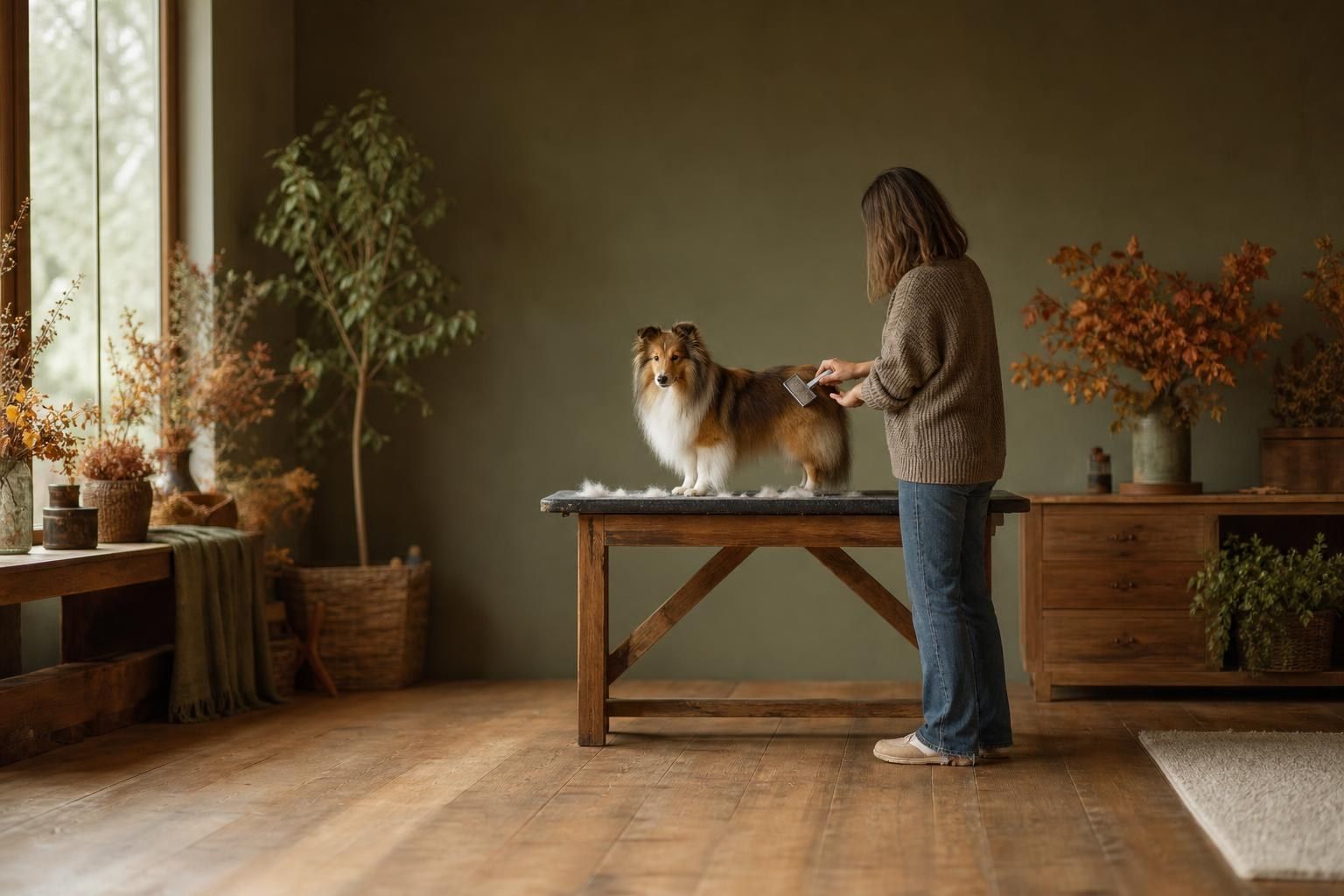
How the double coat works
The CKC standard describes a double coat: a long, straight, harsh outer coat over a short, dense, furry undercoat. The undercoat traps warm air close to the skin, which is why a Sheltie can trot through a January morning that would send a short-coated dog straight back indoors.
The same layers protect the skin from sun and help in summer heat as well. That is the main reason grooming guides warn against shaving the breed, a point covered further down. The job of grooming is to keep both layers working: loose undercoat out, outer coat untangled, skin clean and dry underneath.
Coat colour makes no difference to the routine. A sable, a tricolour and a blue merle all need the same brushing, though loose undercoat shows up rather more on a dark sofa than a light one. The breed overview explains the colours the standard accepts.
A twice-weekly brushing routine
Plan on brushing a couple of times a week, and more often when the dog is shedding heavily. Twenty minutes done properly beats an hour of frantic work once a month, because tangles that are caught early come out with a comb and tangles left for weeks turn into mats.
Mats form in predictable places: behind the ears, at the elbows and under the tail, where the hair is soft and rubs as the dog moves. Check those spots every time, even if the rest of the coat looks fine. A light mist of water before brushing helps the brush move through the coat and cuts down on static and broken hair.
Most owners settle on a small kit. A typical set looks like this:
- a pin brush for the long outer coat
- a slicker brush for feathering and the backs of the legs
- an undercoat rake for shedding season
- a metal comb to check that the brush has reached the skin
- a spray bottle of plain water
Work in sections, lifting the coat and brushing from the skin outwards. If the comb catches halfway down, the brush has only skimmed the surface. Finish with the comb behind the ears, where it should run through without snagging.
A simple coat-care routine
- After walksFeetWipe and dry, especially after salted streets
- Twice a weekFull brushMist, brush in sections, finish with a comb
- Each sessionMat spotsBehind ears, elbows, under the tail
- Every few weeksNails and padsTrim nails, tidy hair between the pads
- Heavy shedExtra sessionsUndercoat rake until the loose coat is out
Shedding season and blowing coat
Shelties shed heavily at intervals through the year. Owners call the big sheds "blowing coat", when large amounts of undercoat come loose over a few weeks. The timing varies from dog to dog, so there is no fixed calendar to plan around.
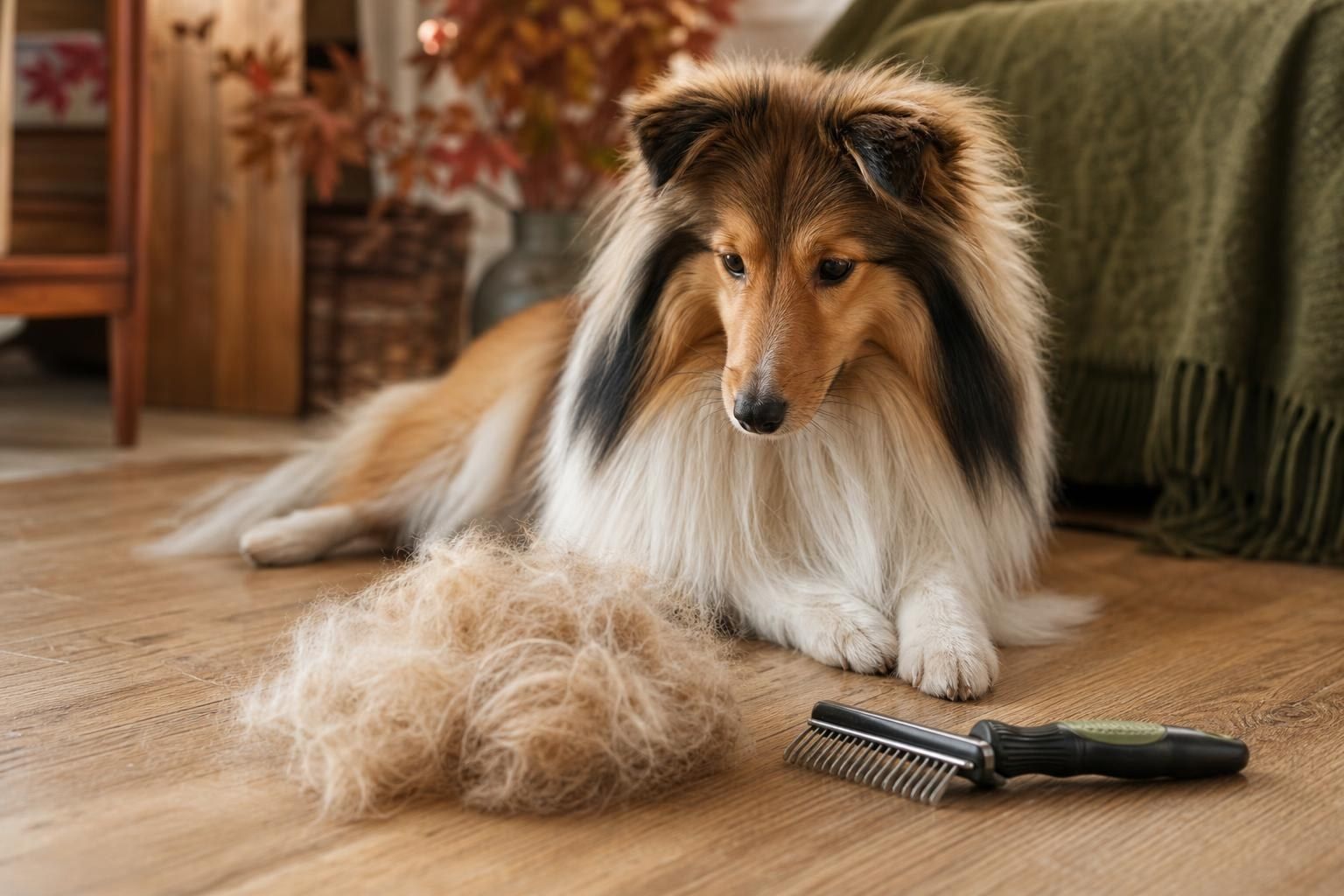
During a heavy shed, step up to short sessions every day or two with an undercoat rake. The aim is to remove dead undercoat before it packs down against the skin, where it holds moisture and pulls on the live hair. The pile beside the dog in the photo is a fairly ordinary result of one session at the height of a shed.
A warm bath can loosen a lot of undercoat at once, as long as the dog is dried thoroughly afterwards. A coat that stays damp at the skin in a cold house is uncomfortable, and in winter it is better to bathe in the morning and keep the dog indoors until the undercoat is completely dry.
Why shaving a Sheltie backfires
Shaving looks like a shortcut in July. It is not. The coat insulates the dog in cold weather and protects the skin from sun and heat, so removing it takes away the protection without making the dog noticeably cooler. Grooming guides, citing advice often attributed to the AKC, also warn that a shaved undercoat can grow back ahead of the guard hair and spoil the coat's texture for a long time.
Winter shaving is worse. The Ontario SPCA specifically advises against shaving dogs down in winter. A short tidy of the feet and the area under the tail is fine, and it keeps the dog cleaner. A full clip is something to agree with a vet only for a medical reason.
If heat is the worry, regular brushing is the real fix. A coat with the dead undercoat removed lets air move close to the skin, while shade, water and walks at cooler times of day do the rest.
Tidy, do not clip
Trimming the hair between the pads and around the feet is normal care. Shaving the body coat is not, in summer or in winter.
Feet, nails and Canadian winter streets
Hair grows between a Sheltie's pads, and in winter it collects snowballs and salt. Keep it trimmed level with the pads, and trim the nails often enough that they do not click on a hard floor. Every few weeks is a typical rhythm, though dogs that walk on pavement wear them down faster.
The BC SPCA warns that the salt and ice melt used on sidewalks can hurt a dog's paws. Clean the feet with warm water and towel-dry them after every winter walk. The Ontario SPCA suggests booties and wiping the paws and underside after walks, and the BC SPCA suggests rubbing petroleum jelly into the pads before going out.
Antifreeze is the hazard people forget. The BC SPCA calls it extremely poisonous to pets and notes that it tastes sweet, so a dog that may have licked any needs a vet right away. Ears, tail and paws are the usual sites for frostbite, and young, old and small dogs are at greater risk. If you suspect it, the BC SPCA advises placing the area in a bowl of lukewarm water, patting it dry without rubbing, avoiding direct heat such as a hairdryer, and calling a vet.
Ears, teeth and the weekly once-over
A brushing session is the best health check most dogs ever get. With your hands in the coat twice a week, you will notice a new lump, a sore patch of skin or a tick long before anyone would see it through all that hair. That matters in a breed with an inherited skin disease, dermatomyositis, explained in the Sheltie health guide.
Look inside the ears for redness or a sour smell, and wipe away any dirt with a soft cloth. Lift the lips and check the teeth and gums. Dental care at home, with a dog toothbrush and a toothpaste made for dogs, is easier to start with a puppy than with a set-in-its-ways adult.
Note anything unusual and mention it at the next vet visit. A few lines in a phone note, with dates, are more useful to a vet than a vague memory of something odd last spring.
Starting a puppy on the brush
A puppy coat is short and soft, which makes it the right time to teach the routine rather than the time to skip it. Two or three minutes on a table or a non-slip mat, a few strokes of a soft brush, a look at the feet and a treat is plenty. Over months, sessions get longer as the adult coat comes in.
Handle the paws, ears and tail daily so the dog accepts it as normal. A dog that stands calmly for nail trims at one year will save you a great deal of struggle at ten. The puppy guide covers the first weeks at home more broadly.
One last thing to take to any professional groomer: the dog's MDR1 result. If a groomer or kennel ever arranges sedation through a vet, that result changes which drugs are safe. Write it on the intake form.
How the workload compares
Owners deciding between breeds often ask how the Sheltie coat compares with a Cavalier's. Both need regular brushing, but the Cavalier's long, silky coat, which the CKC standard says should not be trimmed apart from the underside of the paws, is generally a lighter weekly task than a full double coat in a heavy shed. The Cavalier or Sheltie comparison sets the two side by side, and the Cavalier grooming guide has the spaniel routine.
Size makes a difference too. A dog near the top of the CKC height range of 40.75 cm (16 in) carries noticeably more coat than one near 33 cm, and the American and English types page explains why US dogs are often larger.
Next stopAmerican vs EnglishWhere the facts come from