Cavaliers in Ontario: what the law asks and where hearts get checked
Ontario has more of its dog rules written into provincial law than most other provinces, and it is home to the cardiology service at the Ontario Veterinary College in Guelph. For a breed where heart disease is the main worry, that pairing makes the province a sensible place to start reading.
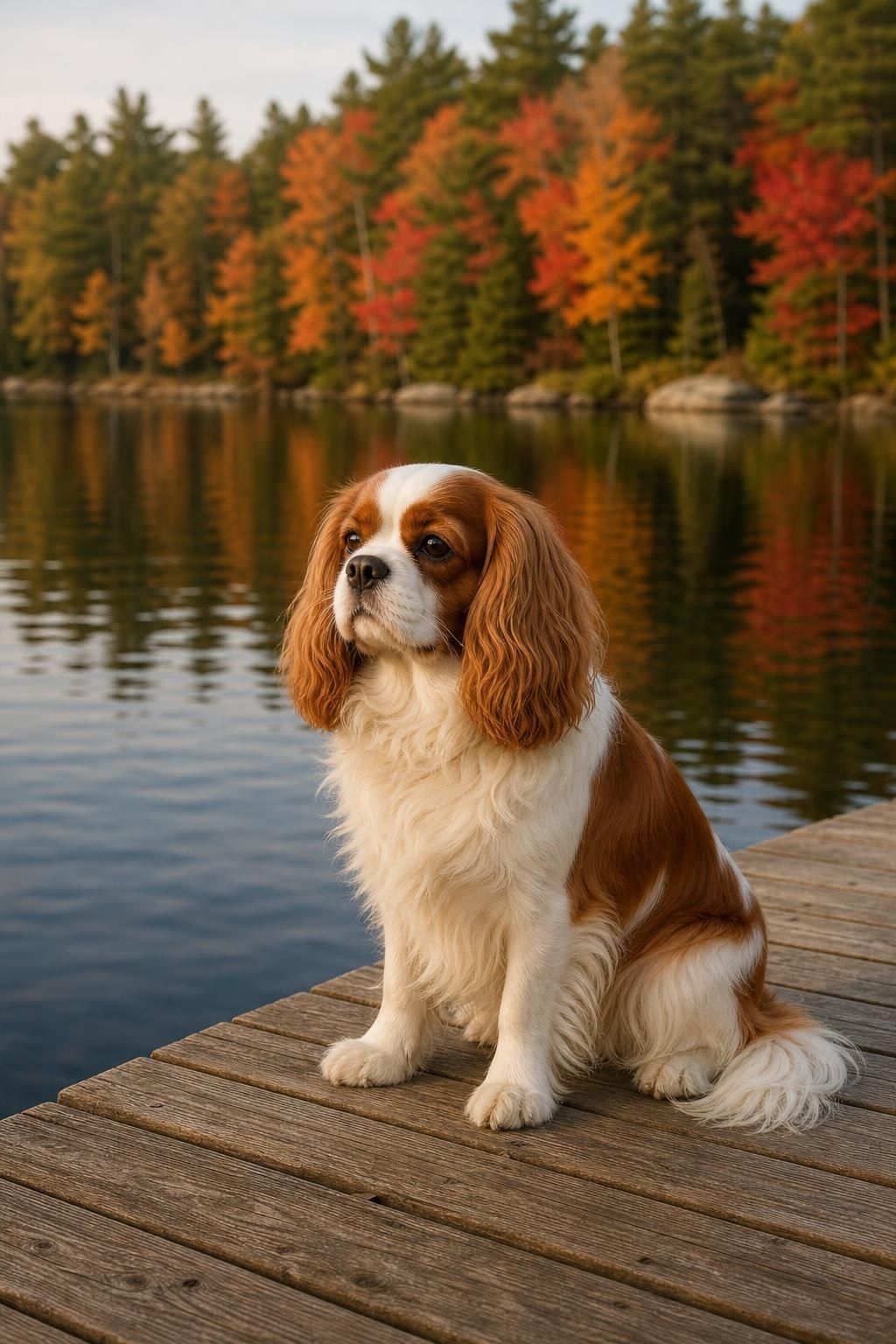
Three pieces of law worth knowing
The main statute is the Provincial Animal Welfare Services Act, 2019, usually shortened to the PAWS Act. The everyday detail sits in its standards-of-care regulation, O. Reg. 444/19, which sets out what any owner must provide. None of it is breed-specific. It applies to a Cavalier in a Mississauga condo exactly as it applies to a farm collie.
In 2024 the province passed the Preventing Unethical Puppy Sales Act, which amends the PAWS Act and makes it an offence to operate a puppy mill. According to a summary published by Animal Justice, the conditions that count include separating puppies from their mother before eight weeks and breeding females younger than one year. The PAWS Act itself sets the minimum fine at $10,000, rising to $25,000 where a dog dies or has to be euthanized.
Check the current text of the 2024 amendment on Ontario's e-Laws site for its in-force date, and in the meantime treat the eight-week line as the minimum any reputable breeder already keeps, not as a rule a court has tested. The breeder checklist covers what a good one does on top of it.
The third piece is older and much clearer. Under R.R.O. 1990, Reg. 567 under the Health Protection and Promotion Act, every dog, cat and ferret aged three months or older must be vaccinated against rabies, a rule that has applied province-wide since O. Reg. 497/17. The vet issues a certificate and a tag. A puppy bought at eight weeks will reach that age within a few weeks of coming home, which is why the first-months schedule puts the rabies shot early.
Keep the paperwork
The rabies certificate is the document a boarding kennel, groomer or municipal licensing office is most likely to ask for. Store a photo of it on your phone.
Heart screening at Guelph and closer to home
Mitral valve disease is the reason Cavalier owners talk about cardiologists the way other dog owners talk about groomers. The Cavalier King Charles Spaniel Club of Canada recommends screening by a cardiologist from age one, using auscultation together with an echocardiogram, and says plainly that a routine vet visit is not sufficient for heart screening. The full reasoning is on the health testing page.
Ontario has the advantage of the OVC Cardiology Service at the University of Guelph. It offers echocardiography, X-rays, ECG and Holter monitoring, and states that it has two of only 25 board-certified specialists in veterinary cardiology in Canada. That figure is worth sitting with: across the whole country, the number of people qualified to read a Cavalier's heart to breeding-clearance standard is small.
Guelph is also where a long-running study, active since 1992, has looked for a DNA marker for the breed's heart disease. The national club reports that none has been found. So there is still no cheek-swab answer, and a breeder's heart certificate still has to come from a specialist exam.
The club's advice covers a pet that is not going to be bred as well. Where a specialist visit is hard to arrange, many owners in practice ask their regular vet to listen at every annual visit and get a referral to a cardiologist if a murmur appears. Bring the dog's previous results along, because the change over time tells a specialist more than a single reading.
Who to contact in Ontario
Southern Ontario has its own regional Cavalier club with a public website. That is a better starting point than any classified site, because club members can tell you who is planning a litter and who actually tests. The national club's directory and the CKC Puppy List cover the rest of the province, including the north, where breeders are fewer and far between.
If you would rather adopt, the national club's rescue is small and usually places older dogs. The Ontario SPCA is the general welfare body for the province.
City sidewalks and cottage docks
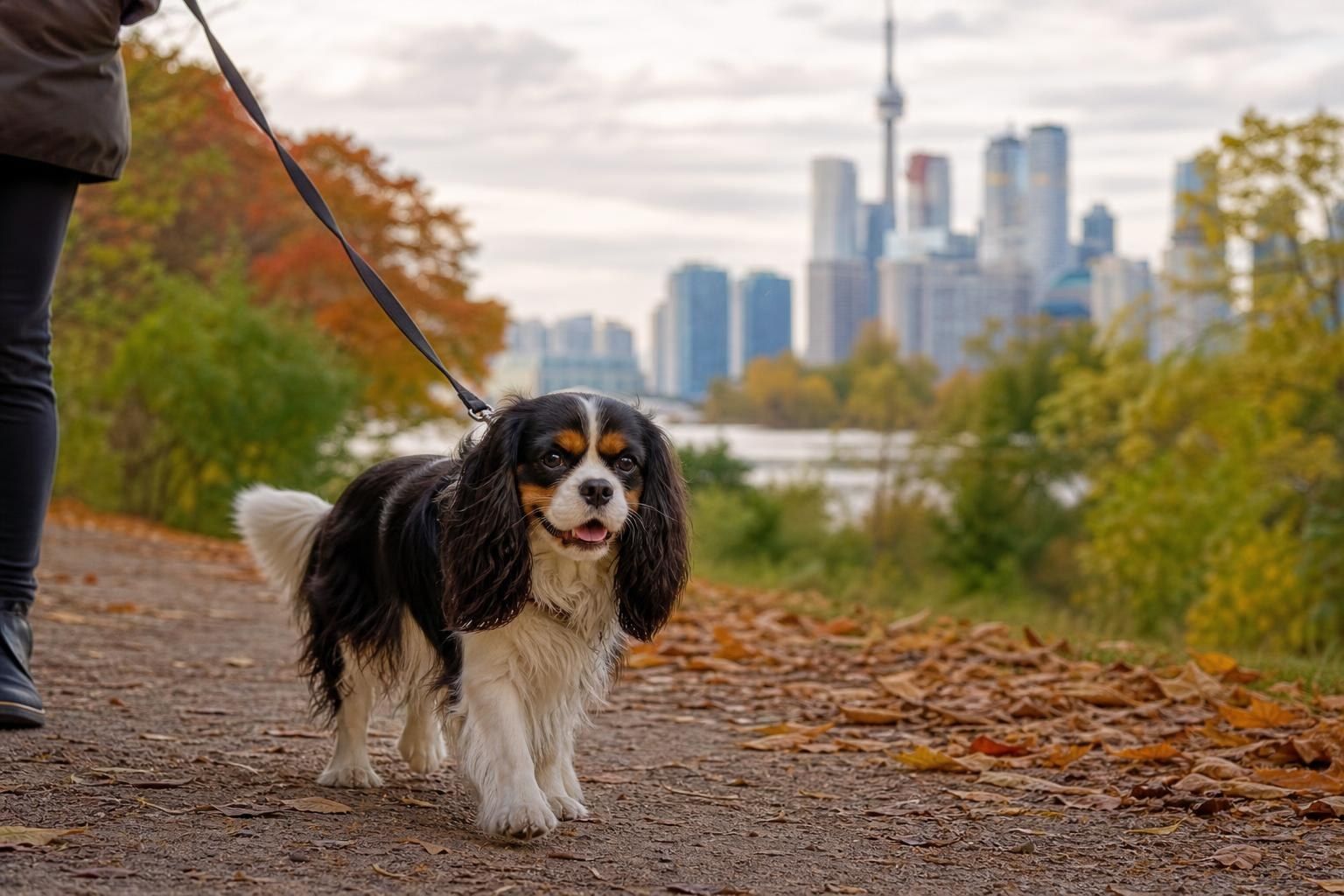
A Cavalier adapts well to Toronto, Ottawa or Hamilton apartment life because it needs company far more than it needs a yard. Two good walks a day and a chance to sniff are enough for most adults. The breed's general profile describes the temperament in more detail; in short, it will greet the concierge, the courier and the toddler in the elevator with the same enthusiasm.
The harder months are not only the winter ones. Spring melt along waterfront paths leaves grit and puddles that work their way into the feathering on the legs and ears. Summer at the cottage brings lakes, docks and long car rides. A Cavalier is a willing swimmer in some cases and a nervous one in others, and a small dog on a dock is easy to lose sight of.
Before a long drive north, check that the rabies tag is on the collar. If the dog has a known murmur, ask your vet whether a full day of heat and excitement is a good idea, and pack water and a shaded crate for the trip.
Ears deserve a look after any swim. The grooming guide shows how to dry and comb them without pulling the feathering.
A short Sheltie aside
Readers deciding between a Cavalier and a Shetland Sheepdog often ask whether Ontario has a Sheltie club. The Canadian Shetland Sheepdog Association lists no member club for Ontario. There is, however, the Southern Ontario Sheltie Rescue Society, a registered charity in Burlington, established in 2003, that places dogs through foster homes, according to its Halton community directory listing, and also takes Rough and Smooth Collies.
It does not take Cavaliers. If both breeds are on your shortlist, the side-by-side page Cavalier or Sheltie sets out the differences in coat, energy and health.
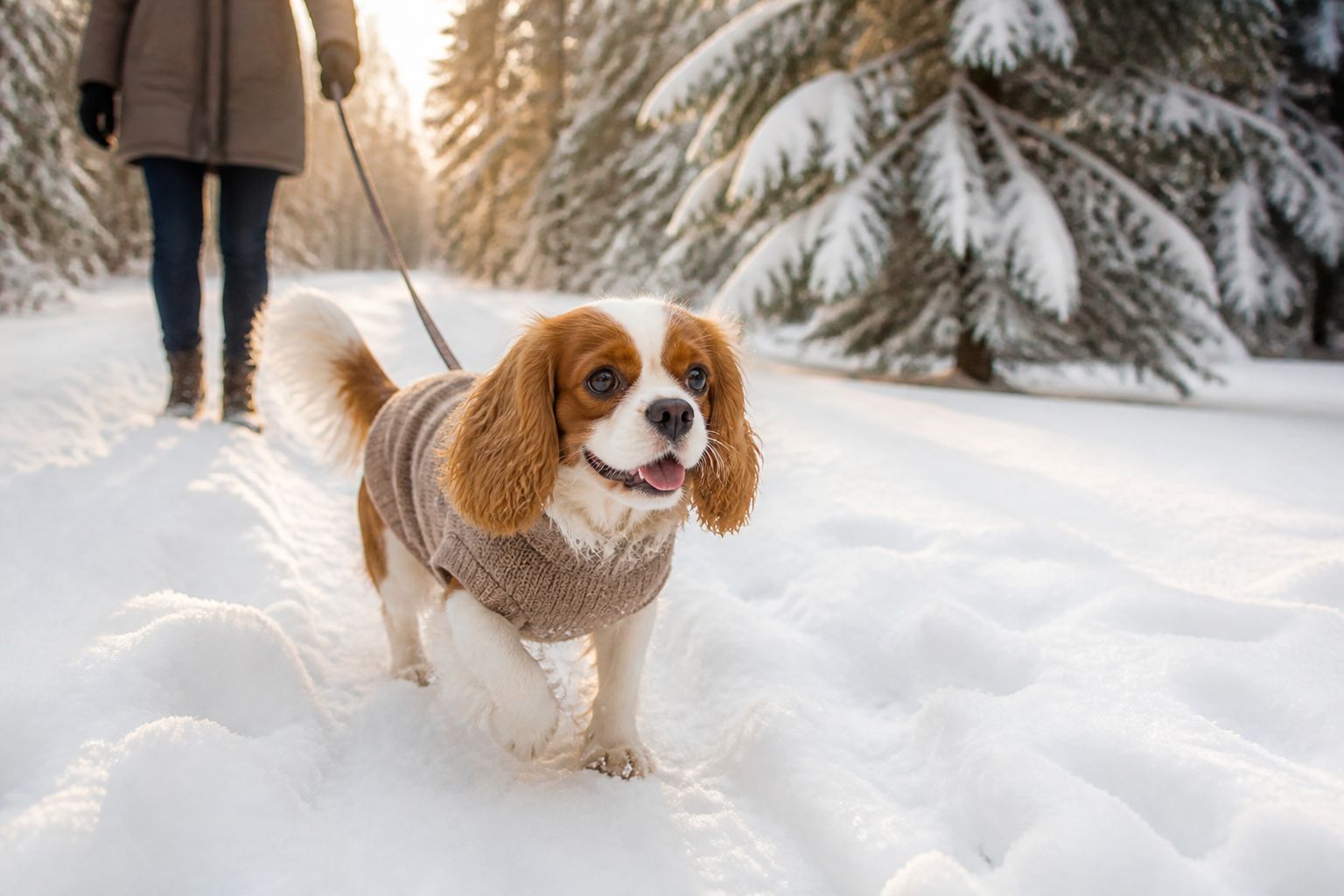
Toronto winters, road salt and short days
Toronto's January mean was −6.3 °C over the 1971–2000 climate normals, and much of the province sits colder than that. For a toy dog with a feathered coat, the cold itself is rarely the main trouble on a city walk. Salt, slush and grit are. The Ontario SPCA publishes simple advice that suits a Cavalier well.
Use booties or a paw protectant before walks on salted sidewalks, as the Ontario and BC SPCAs suggest.
Wipe the paws and underside with a damp towel after each walk, then check the pads for cracks or redness.
Do not shave the coat down for winter; the Ontario SPCA's advice is to leave dogs their natural insulation.
The Ontario SPCA says animals with underlying medical conditions can also be very vulnerable in the cold, so shorten walks for a Cavalier with a known murmur.
What a Cavalier costs in Ontario
The Ontario Veterinary Medical Association's 2025 estimate, as reported by money.ca, puts an adult dog at about $5,118 a year including $1,402 for insurance. Add a puppy price of roughly $2,000 to $4,000 or more from a health-testing breeder and the first year adds up quickly; the calculator lets you test your own numbers.
Questions people ask
1Is there a Cavalier King Charles Spaniel club in Ontario?
Yes. The national club lists The Cavalier Fanciers of Southern Ontario as a regional club, with a website at cfsocavaliers.ca. Outside the south of the province, use the Cavalier King Charles Spaniel Club of Canada's breeder directory and the CKC Puppy List, which you can filter by province.
2At what age does a dog need a rabies shot in Ontario?
Ontario Regulation 567 requires dogs, cats and ferrets aged three months or older to be vaccinated against rabies, everywhere in the province. Your vet gives a certificate and a tag. A Cavalier puppy that comes home at eight weeks will usually get the shot at one of its early vet visits, as the puppy care guide explains.
3Can a breeder in Ontario sell a puppy before eight weeks?
The 2024 Preventing Unethical Puppy Sales Act treats separating puppies from their mother before eight weeks as one of the conditions of a puppy mill, according to Animal Justice. Its in-force date is on Ontario's e-Laws site, and no reputable Cavalier breeder lets a puppy go earlier anyway.
4Where can a Cavalier get an echocardiogram in Ontario?
The OVC Cardiology Service at the University of Guelph offers echocardiography, X-rays, ECG and Holter monitoring. Your regular vet can refer you there or to another board-certified cardiologist. The national club recommends cardiologist screening for every Cavalier from age one, and says many breeders have their dogs checked annually.
5Are Cavaliers a good choice for a Toronto condo?
Usually, yes. Cavaliers are small, sociable and need company more than space, so a condo with two decent walks a day suits most adults. The bigger issue is winter salt on city sidewalks; booties or a paw balm and a foot wash after walks keep the pads from cracking.
6What happens to a puppy mill operator under Ontario's 2024 law?
The amendment to the PAWS Act makes running a puppy mill an offence. Under the PAWS Act, the minimum fine is $10,000, or $25,000 where a dog dies or has to be euthanized. The full text of the Act, as amended, is published on ontario.ca.
The other provinces
Alberta
Edmonton's deep cold, Calgary's chinook swings, and what a small dog with a heart risk needs from an Alberta winter.
Read the notes on AlbertaBritish Columbia
Wet coastal winters, ferry trips with a toy dog, and why the BC Cavalier club's rehoming list is closed for now.
Read the notes on British ColumbiaMaritimes
An Atlantic Cavalier club with no website, the Nova Scotia SPCA and PEI Humane Society, and damp coastal winters.
Read the notes on MaritimesQuebec
The February 2024 welfare regulation in plain English, no regional club, and the 2027 National Specialty in Terrebonne.
Read the notes on Quebec