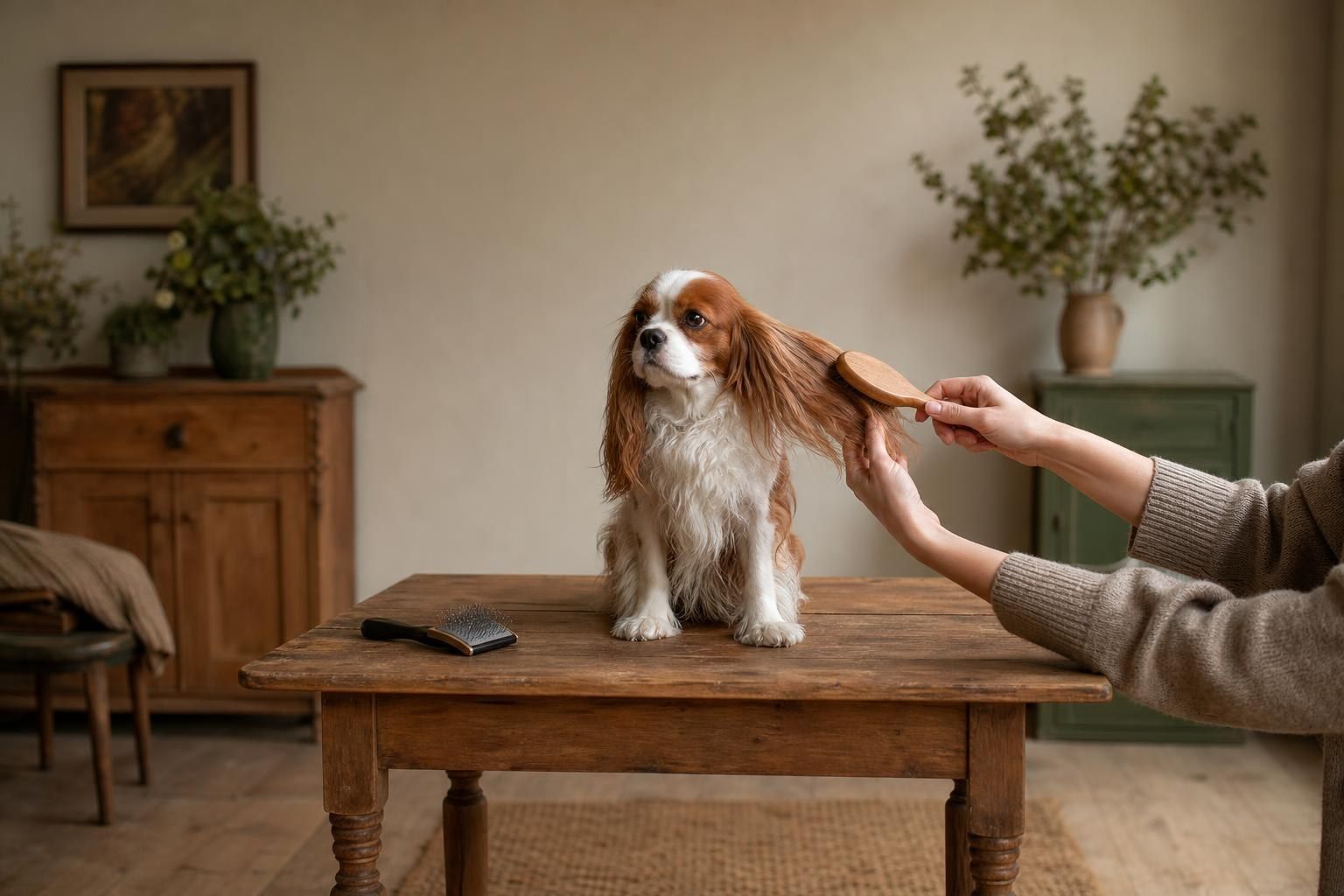
What an untrimmed coat means at home
The UK Royal Kennel Club standard describes the Cavalier coat as long and silky, free from curl, with a slight wave permitted and plenty of feathering. It then adds that the coat should be totally free from trimming. The CKC standard also allows no trimming, apart from the underside of the paws, which may be trimmed for health and safety. The breed standard page explains the rest of the description.
For a pet owner that rule is good news. There is no breed clip to maintain and no regular salon cut built into the cost of the dog. What the coat needs instead is steady brushing, so the feathering on the ears, chest, legs and tail does not knot.
Show dogs follow the rule to the letter, and pets usually get the same single exception: the hair under the feet, which grows long between the pads and is trimmed for grip and cleanliness.
Clipping a Cavalier short is possible, but it removes the look most owners chose the breed for. In winter it also removes insulation from a small dog that already feels the cold.
Brushing: how often and with what
A few short sessions a week keep most Cavalier coats tidy. Five or ten minutes with the dog on your lap or a non-slip mat is enough. The goal is to reach the skin, not just smooth the top layer, because knots start underneath where the coat rubs.
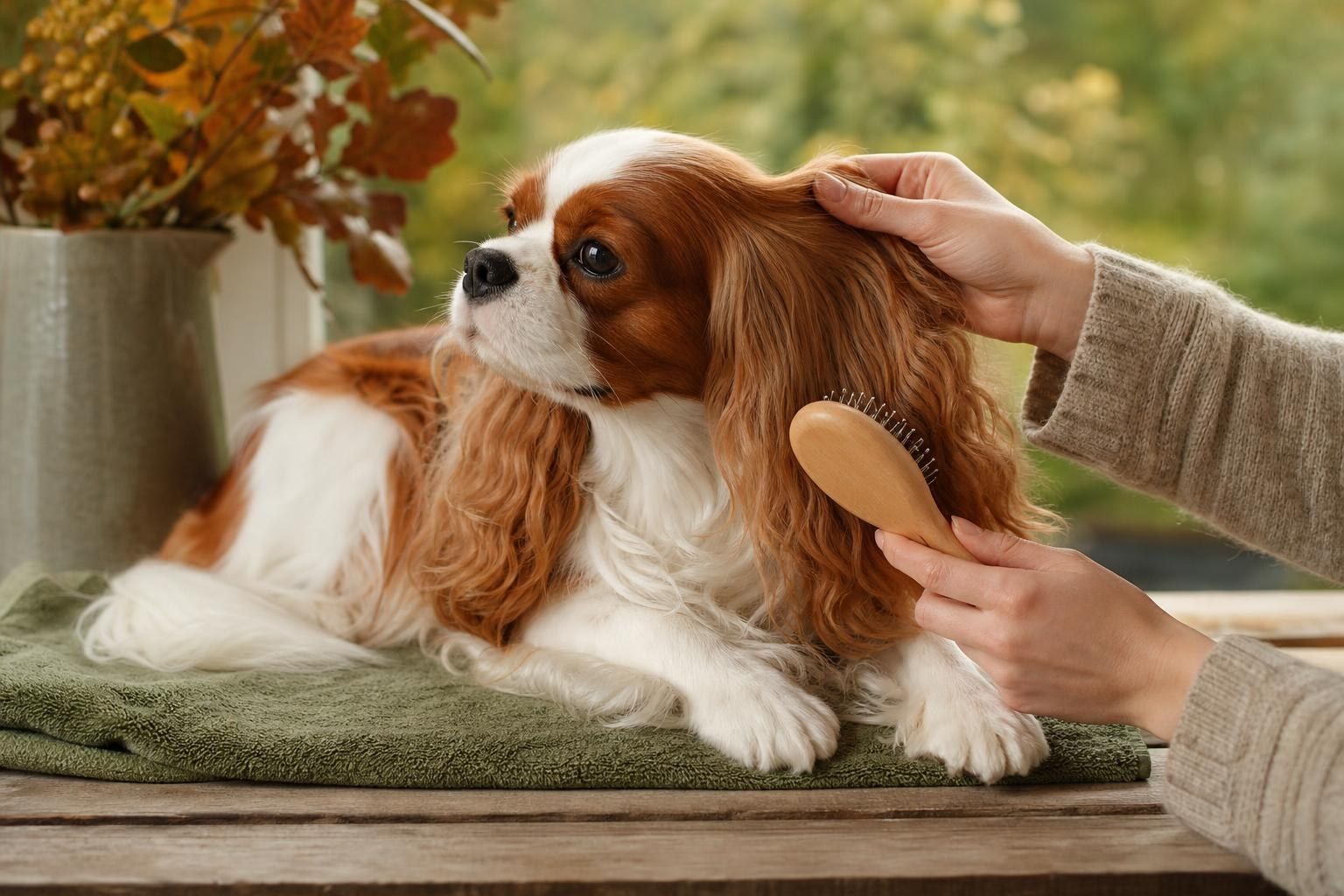
A pin brush handles the body. A metal comb with fine and wide teeth finds the knots the brush missed, especially behind the ears, in the armpits and along the feathering on the back legs. A slicker brush helps on the feet and the trousers but should be used lightly, since the skin is thin.
Work in sections, from the back of the coat toward the head, and hold the hair above a knot so the comb does not pull on the skin. A light mist of water or a grooming spray before brushing reduces breakage on a dry winter day.
Start young. A puppy that learns to lie still for a brush at ten weeks becomes an adult that enjoys it; the puppy care guide covers handling habits in the first months.
Ears and feathering
The long, heavily feathered ears are the breed's signature, and they need their own attention. Comb the feathering right through to the base every time you brush, because mats form close to the head where the ear leather folds. Long ear hair also trails in food bowls; a narrow, deep bowl keeps it cleaner.
Look inside the ears once a week. A healthy ear is pale and clean with little smell. Redness, dark wax, a sour smell, head shaking or scratching are reasons to see a vet rather than to try a home remedy.
One breed-specific point: Cavaliers can have a condition called primary secretory otitis media, sometimes called glue ear, where mucus builds up behind the eardrum. MRI or CT is the most reliable way to confirm it, and its clinical significance is still debated. Ear trouble that keeps coming back is worth raising with your vet, and the health guide explains the scanning that Cavalier owners are most likely to hear about, including MRI for syringomyelia.
Feet: the hair under the pads
Cavaliers grow long hair between and under their pads. Left alone, it turns the foot into a slipper: slippery on hardwood, a trap for burrs in summer and a magnet for snowballs in winter.
Trim the hair flush with the pads using small, round-tipped scissors or a quiet trimmer. Spread the toes gently, trim what sticks out below, and leave the feathering on top of the foot alone if you like the natural look. Many owners do this every few weeks; some leave it to a groomer.
A tidy foot is easier to check, too. After winter walks you want to see the pads quickly for cracks, redness or salt burns, and that is hard through a tuft of wet hair.
Nails, teeth and the small jobs
A small dog walking mainly on grass, carpet or snow will not wear its nails down much. If you hear clicking on the kitchen floor, they are too long. Trim a little at a time every few weeks, taking care to avoid the quick, which on dark nails can be hard to see. A nail grinder suits dogs that dislike clippers.
Do not forget the dewclaws if your dog has them. They sit higher on the leg, never touch the ground and can curl back into the pad.
Teeth are part of grooming in any small breed. Brushing with a dog toothpaste a few times a week is the simplest habit, and your vet can tell you at each check-up whether professional cleaning is due.
Check the eyes as you go. A little dried discharge at the inner corner can be wiped with a damp cloth. Redness, cloudiness or squinting is a vet matter.
Bathing and drying
Bathe a Cavalier when it is dirty or smells, not on a fixed calendar. For many pet dogs that means every few weeks; show dogs are washed far more often. Use a dog shampoo, rinse until the water runs clear, and add a light conditioner if the feathering tangles easily.
Brush out knots before the bath. Water tightens a mat, and a tight mat is much harder to remove once it has dried.
Dry thoroughly. Towel first, then use a dryer on a low, cool setting while brushing the coat straight. A Cavalier that goes outside damp in January is a cold dog, and the ears and armpits stay wet longest.
Between baths, a damp cloth on the feet and belly after walks does most of the work, especially in salt season.
Winter grooming: salt, snow and cold paws
The BC SPCA warns that the salt and ice melt used on sidewalks can hurt a dog's paws. Its advice is to clean the paws with warm water after walks and towel-dry them. The Ontario SPCA adds booties and wiping the paws and underside with a damp towel when you get home.
For a Cavalier, that means a towel and a bowl of lukewarm water by the door from November to April in most of the country. Feathered legs collect salty slush, so rinse those too.
The Ontario SPCA also advises against shaving dogs down in winter. With a breed whose coat is meant to stay long, that is an easy rule to follow. Frostbite tends to strike the ears, tail and paws, and toy breeds and dogs with medical conditions such as heart disease are at greater risk, which describes many older Cavaliers.
Climate differs a lot between regions, from Vancouver rain to Edmonton cold. The Cavaliers in Canada pages add local detail.
Antifreeze is the bigger danger
The BC SPCA calls antifreeze extremely poisonous to pets and notes that it tastes sweet. Wipe paws after walking through garages or driveways, and if the dog may have licked any, go to a vet right away.
Tools and a simple routine
The kit is short: a pin brush, a steel comb, a soft slicker, small round-tipped scissors, nail clippers or a grinder, a dog shampoo and a good towel. Add booties or paw wax for winter if your dog will tolerate them.
A professional groomer is useful for a tidy-up of feet and a thorough bath and dry, especially before a holiday visit or after a muddy spring. Ask for the coat to be left natural; groomers who mostly see doodles may assume you want it short.
Compared with a double-coated breed, the Cavalier is light work. The Sheltie grooming guide shows what seasonal shedding of a heavy undercoat looks like by comparison. A Cavalier owner's busiest grooming week is usually the first salty one in December.
A typical home routine
- Each walkWipe feetSalt, sand and mud off pads
- 2–3× a weekBrush and combEars, armpits, feathering
- WeeklyEar and eye checkLook, sniff, wipe
- Every few weeksNails and feetTrim pads and nails
- As neededBath and full dryBrush out knots first